[Venture Ecosystem Case Study] LocationAI × Payke: A New Form of Cooperation Unlocked by Data Integration
A Future That Connects What People Bought and Where They Went
On April 14, 2026, a press release was published.
Payke, Inc., which operates the shopping app “Payke” for inbound tourists to Japan, and LocationAI Inc., which provides a platform for analyzing location-based big data, announced the launch of a business alliance centered on data integration.
Press Release: “Collaboration with the shopping app ‘Payke’ for inbound tourists to Japan.”
(Article available in Japanese only.)
The core of this partnership is combining LocationAI’s mobility data (where they went) with Payke’s purchasing and interest data (what they were interested in and what they bought). Travelers' behaviors, previously seen as isolated dots, will now emerge as a single connected story of “where they went, what they were interested in, and what they bought.”
So, how did these two companies meet and reach a business alliance in just about half a year? And how will this combination change the future of Japan’s inbound market and tourism? We spoke with them about everything from the characteristics of their services and the background of their partnership, to the future they envision.
First, please tell us about each of your respective services.
What kind of service does Payke provide?
Payke:
Payke is a shopping support service designed to eliminate the moments of confusion that foreign tourists face when shopping in Japan. When visitors from overseas pick up a product, if the packaging is only in Japanese, they might not fully understand its intended application, how to use it, its key features, or its ingredients.
To solve this, the Payke app allows users to simply scan a product’s barcode with their smartphone to view basic information, usage instructions, and features in multiple languages. Rather than just translating the text on the package, our unique strength lies in delivering the essential information travelers need to choose a product, drawing from our proprietary product database.
In addition to the app, we also offer a “Payke Tablet” that can be installed at retail storefronts. Because travelers can scan barcodes on the tablet themselves and check product information in their native language, stores can convey the appeal of their products without having to constantly employ multilingual staff.
Does Payke have strengths not only in translation and product guidance, but also in data?
Payke:
That’s right. The data we accumulate doesn’t only show what was ultimately sold. Through our app and tablets, we can also capture pre-purchase interest and consideration behaviors, such as:
・Which products were scanned
・Which products were compared against each other
・The nationalities and age groups of the people who showed interest
Standard sales data only reveals the products that were finally purchased. Scan data, on the other hand, reveals products that garnered interest but weren’t bought, as well as products that were compared with each other within the store. In short, we can get closer to seeing how customers think—something you cannot grasp from sales figures alone.
We want to understand not just what sold, but why they were interested and why they chose it, and connect that to the next strategies for manufacturers and retail companies.
Value only becomes value when it is conveyed
Payke is not merely a service that displays foreign languages. When a product that might otherwise have been selected and purchased are returned to the shelf due to a lack of information, that represents a lost opportunity. We can reduce such losses by properly conveying the true value of Japanese products to travelers. No matter how excellent a product or service is, it will never be chosen if its value is not understood by the consumer. Payke’s business demonstrates, in a management sense, the importance of both creating value and enabling value to be conveyed.
What kind of service does LocationAI provide?
LocationAI:
We provide a service that analyzes location-based big data using AI to visualize and analyze the flow of people in the real world. With the “Location AI Platform®”, we can analyze where people came from, where they stayed, and where they went afterward. This is utilized across a wide range of fields, including trade area analysis, store opening planning, tourist destination analysis, event analysis, and ad delivery.
For example, you can find out what countries tourists come from, what places they stopped by before and after their visit, and how the flow of people changes throughout each day and week. These insights can be captured based on actual human movement. We are supporting the decision-making of companies and local governments by turning areas that were previously judged on experience and intuition into fact-based insights grounded in location information.
How does mobility data affect the decisions of companies and local governments?
LocationAI:
For instance, when opening a new store, candidate sites were traditionally chosen based on the surrounding population, the number of passengers at a station, or the instincts of the person in charge. However, even when comparing areas with the same population size, the actual demographics, time of day, and directions from which people visit are entirely different.
The same is true for tourist destinations. Looking only at the number of visitors doesn’t tell you where those travelers came from, or what places they visited before and after the destination. By capturing actual movement, initiatives like attracting travelers, measuring advertising effectiveness, opening stores, and promoting sightseeing excursions can be planned based on facts rather than guesswork. We place great importance not just on possessing data, but on providing it in a state that our clients can actually use for analysis and decision-making.
What was Payke’s impression when seeing LocationAI’s service for the first time?
Payke:
The moment they actually showed us their management screen during a meeting left a strong impression on me. Mobility data was visualized on a map, and by switching the area or time period, the movements of inbound tourists instantly appeared right before our eyes.
There is a vast distance between providing data and putting that data into a format that anyone can use. LocationAI has been perfecting the formatting of data at a very high level as their product. Furthermore, the engineering teams from both our companies were able to decide on the methods for data integration at an incredibly fast pace. So, I was amazed not only by the quality of their product, but also by their speed of decision-making and execution.
The value of data is determined not by its volume, but by how actionable it is
What executives need is not just massive numbers by themselves. It is knowing what should be done next as a result of looking at those numbers. LocationAI’s strength lies in turning data into action, rather than letting it stay as mere information. Or, in other words, their strength is transforming location-based big data—which only experts used to be able to handle—into a format that executives and storefront staff can use for decision-making.
How did the two companies meet?
Which company took the first move to make this business alliance?
Payke:
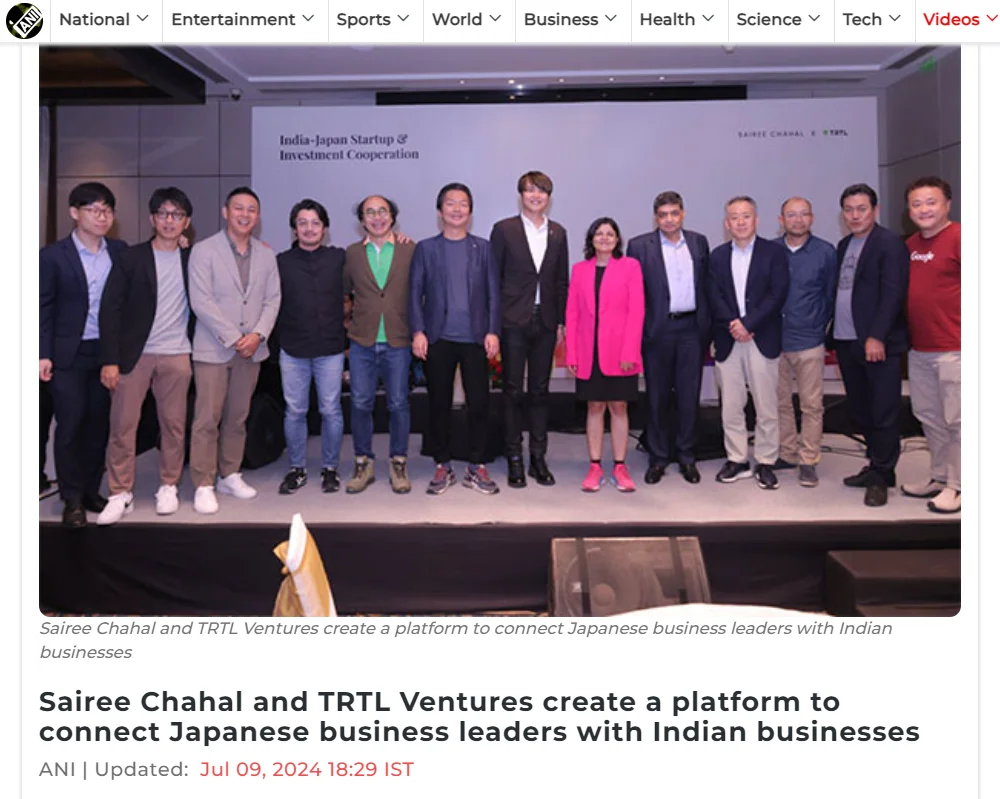
To be honest, I don’t really get the sense that either one of us took the first move. What really got us talking was D-POPS GROUP’s “Venture Ecosystem Summit” held in October 2025.
Greeting each other at the venue was our first point of contact. LocationAI had heard about our business in advance from D-POPS GROUP, and right then and there, we had a lively conversation during which collaborative efforts were suggested. The very next day, LocationAI invited us to have a discussion, and in our first meeting, both parties felt the necessity of working together. Rather than saying one reached out to the other first, I think it’s more accurate to say that we were destined to meet through our mutual connection with D-POPS GROUP.
LocationAI:
We had been thinking about strengthening our analysis of inbound travelers and our ad delivery, so we actively reached out as well. Ever since we heard about Payke from D-POPS GROUP, we sensed the potential for collaboration. At our first meeting, we were convinced that by integrating our mobility data with Payke’s data, we could provide a service with even higher added value.
Why did you both feel the “necessity of working together” during that first meeting?
Payke:
Because we realized that our data sets perfectly mirror each other. We at Payke possess purchasing and interest data that show what inbound tourists were interested in and what they bought. However, we couldn’t see where they had visited before coming to the store, and where they went after making a purchase.
On the other hand, LocationAI has data that show exactly where people were moving, but they couldn’t see what they bought at those places. The parts we each couldn’t see fit together perfectly, like puzzle pieces. The moment this structure became clear, the discussion shifted from “Should we do this or not?” to “Where do we start?”
LocationAI:
We felt exactly the same way. In addition to data tied to purchasing behavior, Payke possesses highly reliable data regarding nationalities and age groups. We could now understand traveler interests and purchasing behaviors that couldn’t be grasped solely through movement data. For us too, it was a combination that would vastly enhance the accuracy and value of our service.
Why did you choose each other’s companies over any others?
Payke:
There are two main reasons. The first is the foundation of trust, stemming from the fact that we both have received investment from D-POPS GROUP. Data integration is a highly sensitive undertaking that comes with responsibility toward each other’s users and clients. That is exactly why being a trustworthy partner was more important than anything else. Sharing the same views on management and attitude toward growth under the same shareholder greatly influenced both the speed of negotiations and the quality of our discussions.
The second reason is technical capability and the scale of data. No other potential partner had a high-quality platform that can both analyze location-based big data with AI and visualize it so anyone can use it, and also possessed data on a global scale.
LocationAI:
It was the fact that Payke possessed data tied to purchasing behavior, along with accurate nationality and age information. Additionally, rather than just developing a service, their platform has been introduced to many distribution and retail businesses and is actually being used by travelers, which was a huge draw. The fact that their data is not just large in volume, but reliable data based on actual purchasing behavior, was something we valued highly.
Strong companies acknowledge their blind spots
People in businesses are used to talking about their strengths. On the other hand, when a company acknowledges the areas it cannot see on its own, that opens up the possibility for huge improvements. Rather than trying to do everything in-house, they connect with companies that have different strengths. Instead of hiding their weaknesses, they turn them into possibilities through the strengths of other companies. Innovation doesn’t only refer to creating new technology from nothing. It is also about connecting already existing, outstanding values in a new, meaningful way.
What changes will emerge from the intersection of purchasing data and mobility data?
Payke:
A single purchase is just one scene in a journey. A tourist’s day is a continuous sequence of moving, sightseeing, eating, shopping, and lodging. Traditional purchasing data only captured a single moment within that. By overlaying it with mobility data, purchases that were just dots will now become visible as a line—a connected story.
For example, let’s say a group from Taiwan buys cosmetics at a drugstore. What areas did they tour before that, and what town did they move to afterward? You will be able to understand not just what was bought, but the context of why that product was bought in that location. This is a world we could never have reached with purchasing data alone.
LocationAI:
By analyzing purchasing behavior and visited locations together, we can understand travelers’ tastes, preferences, and interests much more deeply. Furthermore, we can deliver ads based on that understanding. By knowing not just where people visited, but what they were interested in and what they bought, we will be able to deliver information and experiences better suited to the traveler.
Can you also prompt their next actions, in addition to analyzing them?
Payke:
Yes. We don’t want to stop at simply making behavior visible. Through Payke’s surveys, we can directly ask the ‘why’ behind their actions. Moreover, through information delivery linked to location data, we can also encourage customers’ next actions. We engage with them at those locations based on the behaviors we understand. The interesting part of this collaboration is that in one go, we’re able to see what people are doing and influence their next actions.
How will this partnership change tourism in Japan? Where else can it be utilized, besides manufacturers and retailers?
Payke:
We believe local governments, destination management organizations (DMOs), and tourism operators are clear targets. If they know where inbound tourists came from, where they toured, and where and what they consumed, they can utilize this to promote excursions within the region and even implement measures to prevent over-tourism in certain spots. It becomes data that can be used directly for regional decision-making, such as refining tourism content. Additionally, any company that wants to understand inbound movement and consumption—airports, railways, transportation operators, commercial facilities, developers, etc.—can be a target.
LocationAI:
It can also be utilized by local governments, travel agencies, consulting firms, and advertising agencies. Because they will be able to develop methods of attracting tourism based on actual human movement, more evidence-based tourism marketing becomes possible.
What possibilities does this hold for regional revitalization?
LocationAI:
For travelers on long-term stays without fixed itineraries, we will be able to suggest visits to other regions, rather than just famous tourist destinations like Kyoto. By understanding their interests and behaviors, and delivering new destinations tailored to them, we believe we can connect this to regional excursions.
Payke:
It’s not that rural areas lack charm, but in most cases, that charm simply hasn’t reached the traveler. By gathering information about a person’s purchases and movement together, we can understand what kinds of experiences and products he or she is interested in. We will then be able to deliver regional products, culture, food, scenery, and experiences that match those interests, at precisely the right timing.
Data will shape the future of regions
What is born from this partnership is not just improved advertising accuracy. It is about suggesting new destinations tailored to each individual’s interests, rather than forcing travelers to move away from famous tourist spots. As a result, the traveler’s experience is enriched, and new people and purchases stream into regional areas. Data meant to increase corporate sales transforms into data that shapes every region’s future. That is how this partnership can contribute to society.
Please tell us about the results of the partnership and your future goals.
After announcing this partnership, what kind of reactions did you receive internally and in the marketplace?
LocationAI:
The appeal of our service has increased as the volume of data grew, and we became able to perform analysis and ad delivery based on first-party data. We have also received comments from existing clients saying that the reliability of our analysis and delivery has increased. This has also led to an increase in new inquiries.
Payke:
Internally, our data, advertising, and sales teams have each started linking this to concrete proposals, thinking, “We can use this for that project.” After the announcement, we saw an increase in consultations from existing clients asking, “Can you add mobility data to your analysis?” as well as inquiries from advertising companies and agencies. In particular, we are seeing more demand from areas where we used to have difficulty creating touchpoints as a single company, such as local governments, airports, and transportation-related entities.
By what metrics do you judge if this partnership is a success?
Payke:
We are thinking about it in three stages. The first is the number of joint proposals and joint projects with manufacturers, retailers, local governments, etc. The second is the number of companies continuously using our analysis and advertising menus utilizing the integrated data. And the final stage would be for our integration of inbound purchase data and mobility data from both our companies to be referenced as an industry standard. Our most important metric is not the success of a one-off campaign, but whether the number of projects born from this partnership continues to grow.
LocationAI:
As for our company, we consider the important metrics to be an increase in inbound-related inquiries, the creation of new services utilizing this partnership, and ultimately, whether this leads to higher revenue.
Do you have any expectations for D-POPS GROUP going forward?
Payke:
This partnership began from a single greeting exchanged at the Summit venue. First and foremost, I am grateful that you created a place where portfolio companies could actually meet and spark synergy. I believe there are many companies within D-POPS GROUP’s ecosystem that possess technologies and assets we haven’t yet encountered. I hope you continue to be the starting point for multiplications that will birth additional collaborations like the one between Payke and LocationAI. After all, we also want the example of our partnership to contribute to the entire ecosystem.
LocationAI:
We hope you will continue to actively promote alliances with portfolio companies that generate synergy, just like this one. We also want to proceed with flexible collaborations with various companies in areas such as mobility data analysis and advertising.
Finally, please give a message to the companies reading this article.
Payke:
With this partnership, the way we perceive inbound tourism will change from 1-dimensional dots to 2-dimensional lines and shapes. Up until now, data focused primarily on the moment a product was sold, but now we can capture the action before and after that moment—where they came from, where they went in an area, and where they headed afterward. Manufacturers, retailers, local governments, and tourism operators facing the inbound tourist market will be able to make decisions based on the integrated facts of purchasing and mobility, rather than having to rely on intuition or fragmented data.
There is no need to start with a massive project. You can start small, analyzing a single product or a single area. If you feel the desire to understand the true picture of inbound tourism, please consult with us.
LocationAI:
Based on our mobility data analytics, we look to pursue flexible alliances in fields such as data analysis and advertising. By combining different data—such as purchasing data, mobility data, and customer data—we can bring out new value that was not previously visible. If your company is interested in collaboration, please reach out to us.
Editor’s Note
Payke and LocationAI did not simply compensate for what the other lacked. They had each spent a long time refining their individual strengths, and when they brought those strengths together, it produced something that neither company could have created alone.
This partnership is an initiative that evolves inbound marketing, and at the same time, it is a management case study demonstrating how companies should connect and create new value in society.
The era of trying to handle everything entirely in-house may already be over. Honestly acknowledging that there are areas you cannot see on your own, and joining hands with companies possessing different strengths; combining each other’s customers, technology, data, and knowledge; doing these things results in something closer to multiplication than simple addition.
This is what our company means by a “Venture Ecosystem”.
What is the “Venture Ecosystem” that D-POPS GROUP is aiming for?
To be honest, I feel that the catalyst for major change is more often a simple encounter than a meticulously planned business strategy. The moment you feel, “It would be interesting to team up with this person,” take that first step.
After taking enough of those small steps, you may very well set the standard for an industry in a few years. Moving forward, I hope to continue seeing more of that.
D-POPS GROUP Advisor So Sato