


COLUMN

[Entrepreneur Interview #15] Hirai (PlusPass) – Part 2

  • Group Companies
  • Interview
2025.07.08

A New Challenge After 10 Years!
Making an Enterprise That Can Help Improve Digital Literacy

D-POPS GROUP has 24 group companies that we call partners (at the time of publication).

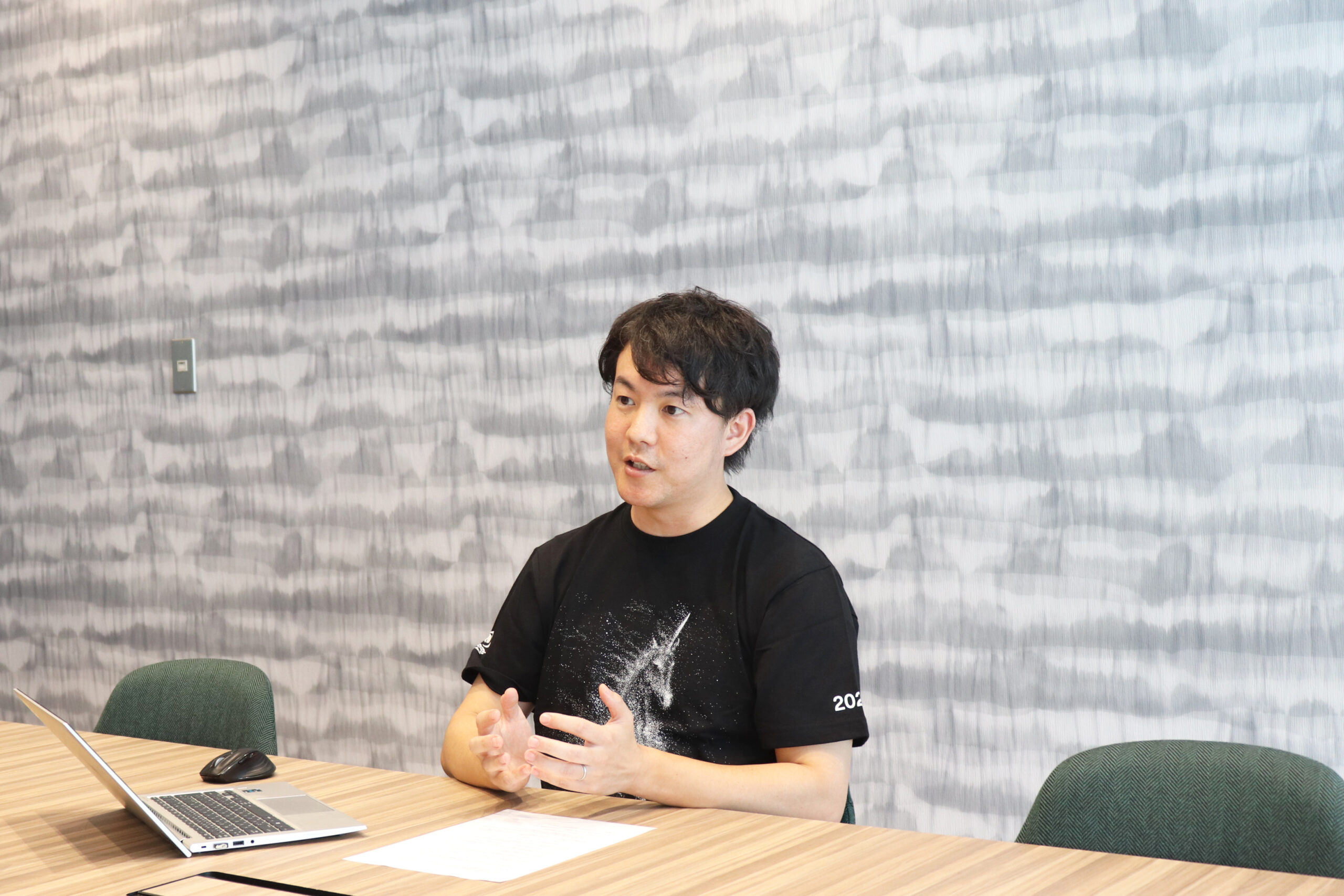
For this article, we interviewed Yuta Hirai, the president and CEO of PlusPass, which was established as a part of D-POPS GROUP in March 2024.

This is the latter part of the interview. To read the first part, click the link below.
https://d-pops-group.co.jp/en/column/pluspass-interview-first-part/

◆Initiatives Since the Establishment of PlusPass

Sugihara:
About one year has passed since you took over Smappy (page in Japanese only). Could you tell us about any unique ideas you came up with or changes you implemented after the business was transferred to you? Have you collaborated with other group companies?

Hirai:
D-POPS seems to be focused more on real-world business, where we interact face-to-face with our customers who come to our shops in person and, in a sense, support the improvement of their IT literacy while they are consulting with us. However, on the inside, I believe D-POPS is a human resource development company.

I’ve also been thinking about the future of Smappy recently, and what I currently believe is that we want to become a company that can provide support by uniting people and digital technology. Since Smappy is close to the digital domain, I want us to properly execute this idea within the telecommunications industry.

To consider societal issues, there is the problem of labor shortages, but I believe the reality is that there are plenty of people, but—to be quite frank—most of them just aren’t the kind of person that companies are looking to employ or recruit, so many of those people are failing to get jobs.

The important thing to recognize is that when skills or knowledge are lacking or whatever, this can be solved through education. So, I ultimately want PlusPass to become a company that can support people in becoming more digitally literate.

As far as collaboration with group companies, PlusPass owes a lot to President Nishikawa of @Solution. He has helped us, not only with the business itself but also with infrastructure migration, so much that I feel like I need to find a way to repay him. We are starting collaborations with various other group companies as well, and we have various projects planned that will be launched soon.

Sugihara:
Earlier, you mentioned that the “ultimate goal of Smappy is to enable users to choose the mobile plan that is perfect for them.” It’s great that your goal is for people to be able to learn about new areas themselves so they can become the kind of digital talent that society needs. To achieve this, I imagine you will need more content and mechanisms for people to be able to learn and gain knowledge. What sort of initiatives do you have for that?

Hirai:
Actually, we are gradually scouting out the territory of AI. The range for implementing AI in the Smappy business is wide, and if people become capable of using it, their individual productivity will increase significantly, so I want us to be able to provide education in the AI field as well.

We have also started increasing our article content. We are filling out our content by both creating new articles and progressing with the rewriting of existing ones.
◆Growth Strategy

Sugihara:
Can you share PlusPass’s long-term growth strategy?

Hirai:
It is similar to what I mentioned before, but I consider Smappy to be merely the catalyst for launching the company. That is not to say that the business we acquired is flawed; rather, I believe it is a business that can be further refined, so I want to build it up properly and create a structure that is suitable for the current era. Essentially, I want to create a high-productivity company.

As for future developments, as I also stated, I want to realize a company that contributes to the improvement of Japanese digital literacy by connecting people with digital technology. I have lived more in the real-world side of business, so I want to create an organizational structure that can effectively contribute to clients while maintaining a real-world business strategy.

Sugihara:
What kind of organization do you want to build, and with what kind of people?

Hirai:
It’s still a bit abstract, but one thing I want to have is a place for people to venture into new territories and grow, and I want to support that growth. So, first of all, I want to recruit people who have an eagerness to grow. Also, I want people who have been helped out by our services and products to be able to give back to the next generation and beyond, so I want to hire people who believe their personal growth contributes to society and others.

In terms of skills, I prefer people who have an open mind toward new things. I want to actively work with people who can approach things with a positive attitude and simply say, “We’re going to use AI now” or “We’re going to try using a new tool”.

Ultimately, I want to create an environment similar to D-POPS. Even if complete amateurs with no experience join PlusPass, they will quickly acquire skills and become capable of admirable performance.

◆Adventures and Mountain Climbing

Sugihara:
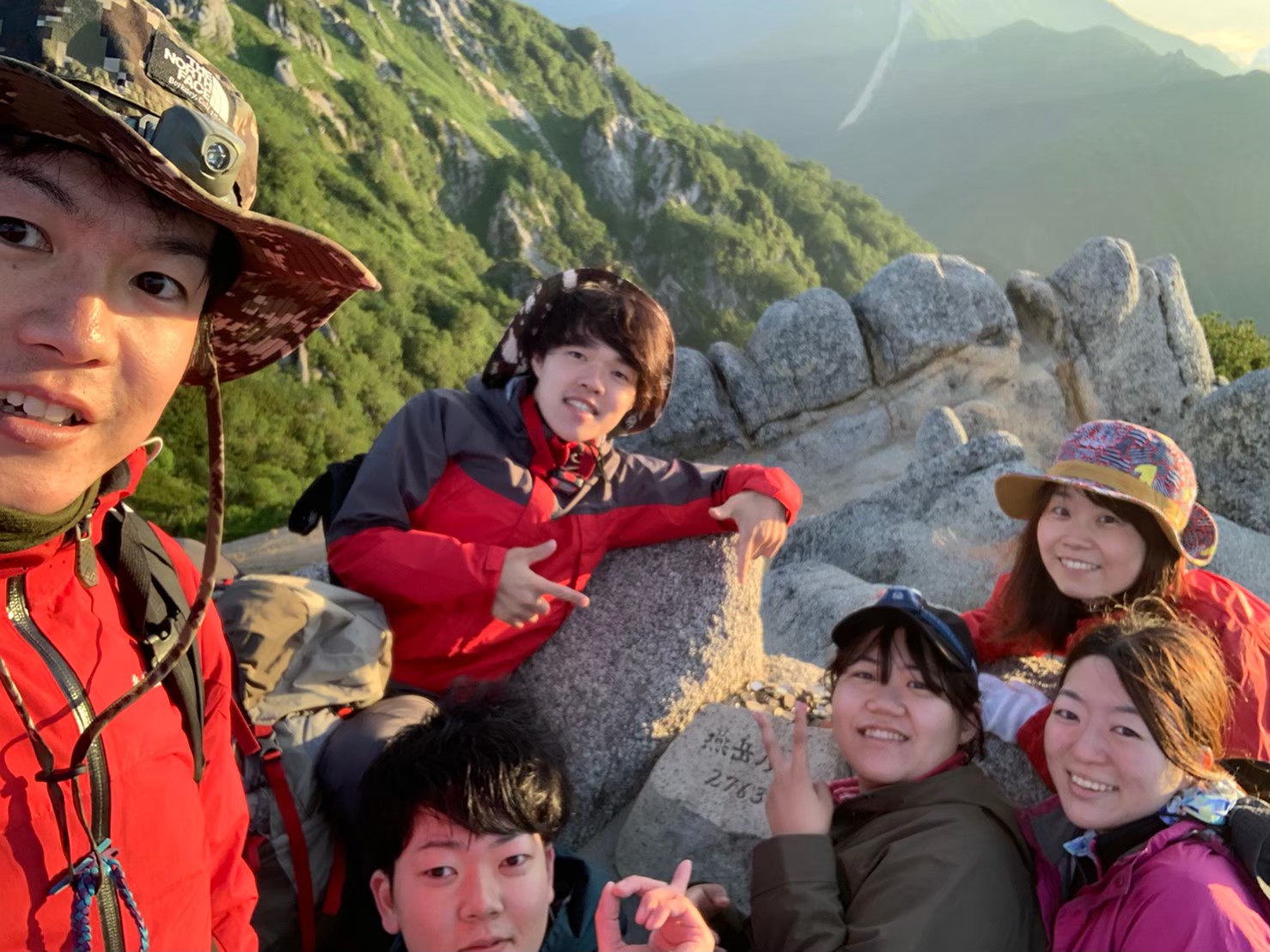
Thank you for those answers. Changing the subject, I heard that you climb mountains as a hobby. In fact, I also enjoy mountain climbing! Now, can you tell us more about your hobbies?

Hirai:
I’m so glad you asked, because I also wanted to talk about mountain climbing with you, ha ha! I got really into climbing as a university student. Since I was in the Kansai region at the time, I climbed mountains like Mt. Ibuki in Shiga Prefecture and Odaigahara on the border of Nara and Mie Prefectures. Then, looking up to Mt. Fuji, I started looking for and climbing mountains that were also around 3,000 meters high.

My memory of mountain climbing is connected to the story that I mentioned earlier, about cycling the length of Japan with a close friend of mine. In the middle of that journey, I got scheduled for a training session for new hires, so I suddenly had to get from Wakkanai in Hokkaido to Tokyo in two weeks.

So, I started at Cape Soya, took a boat from Hakodate to Oma, and since the Great East Japan Earthquake had occurred one year prior, I detoured around Minamisanriku and went from Sendai to Tokyo. I somehow managed to arrive in time for the new hire training, which turned out to be a climb of Mt. Fuji! I was really looking forward to the climb, but it was suddenly canceled that day due to a typhoon. I was incredibly disappointed.

I had been cycling across Japan with the firm intention of climbing the country’s highest mountain, so after the new hire training, I rode my bicycle straight to Yamanashi. People usually take a bus or car to the 5th station of Mt. Fuji and climb from there, but since we weren’t supposed to get into any vehicles during our cross-Japan bike ride, we had to park our bicycles at the bottom of the mountain and climb up. We climbed the mountain, stayed at the 8th station, and then reached the summit. That was my first serious climb over 3,000 meters.

After that, I got hooked on high mountains. I’ve probably climbed Mt. Fuji about three times, and then I climbed the Japanese Alps in Nagano. After that, I went a little crazy and started going for more thrilling mountains, ha ha. Since joining D-POPS, I’ve taken many of my junior colleagues with me.

The first time I decided to go climbing with my junior colleagues in the business division was because I noticed some of them were mentally struggling, and I thought about what I could do to give a push to the ones who had the potential to grow. One thing was to create learning opportunities by visiting new commercial properties together on my days off, which President Goto often did for me. The other was to take a mental break through mountain climbing. After teaching them various things while climbing together, many of them started to gain a clearer perspective.

Going back to the trip across Japan, we did manage to complete the journey from Wakkanai to Okinawa. We mostly slept outdoors; the only times we slept indoors were at each other’s parents’ or grandparents’ houses a few times along the way.
Sugihara:
Both the mountain climbing and the cross-Japan journey sound incredibly active, ha ha. Have you been riding your bike for a while?

Hirai:
Originally, in high school, I usually rode my bike about 30 minutes between home and school. For soccer practice matches, we went to a lot of places, and the high school gave us the option of taking the bus or meeting at the venue. Since junior high, as part of my training, I had always cycled for up to one and a half hours to reach some match venues, so I also rode my bike to high school practice matches. I would even cycle two to three hours to reach those places.

The reason I wanted to cycle the length of Japan was my study abroad experience. When I joined a homestay study abroad program in Canada, I realized I didn’t understand the island of Japan at all. I usually traveled to different regions by train or plane, but I wondered what it would look like if I saw it properly, and that was what got me started.

◆“Realizing a Venture Ecosystem”

Sugihara:
People who enjoy adventurous travel and climbing hard mountains are definitely well-suited for working at startups.

Now, D-POPS GROUP aims to “realize a Venture Ecosystem”. What parts of this goal resonate with you? Do you have any activities that reflect your commitment to building this Venture Ecosystem?

Hirai:
If you’re asking me whether I’m confident that I can contribute to the Venture Ecosystem right now, I would have to say I still have a long way to go. However, President Goto has had a great influence on me, and as someone who wants to take up his philosophy, I’m always thinking about how to make PlusPass—as well as D-POPS—a company that can truly contribute to the Venture Ecosystem.

Also, of course President Goto teaches us about business, but the core of his teaching is about people. So, I feel I must always strive to improve my character and contribute to the people of the world.

Therefore, what I can do now is—for example—connect agencies or PlusPass’s clients to the resources available in the Venture Ecosystem, or conversely, introduce the members of the Venture Ecosystem to beneficial projects.

In every business negotiation, and whenever I meet a new client, I always keep the following question in mind: “What will benefit this person?” At that time, I build a relationship with the client while having a comprehensive understanding of not only D-POPS and PlusPass but also all the products and services inside of D-POPS GROUP.

After I attended an investment company briefing as a member of the Venture Ecosystem, I strongly felt that I needed to learn more about our group companies and investment companies, so that has become a personal challenge to myself. So, I want to proactively study our partners in the Venture Ecosystem and become able to contribute more.

◆5-Year Vision

Sugihara:
What is your 5-year vision for yourself and for PlusPass?

Hirai:
I want to fully promote the Smappy business and complete the plans I have for it right now.

The other thing I need to increase the resolution on is the policy I mentioned earlier—contributing to society by bringing together people and digital technology—which will mean creating new aspects of our business. To advance this new kind of business, I want to hire people, form the structure, and then drive the business forward.

Sugihara:
What challenges do you face in achieving that?

Hirai:
There are two main challenges: solidifying the resolution of our strategy and firmly increasing the investable profit based on the existing business. I believe we cannot move forward without achieving these two points, so I will focus on them first.

◆Message to Readers Visiting Our Website

Sugihara:
Finally, could you offer a closing message to the readers visiting our website?

Hirai:
To new graduates and anyone interested in our Venture Ecosystem: D-POPS GROUP, led by President Goto, is truly trying to create a business entity unlike any other, and it is completely different from the parent companies of typical conglomerates. I think the organization is incredibly unique.

I think you’ll come to understand this if you join D-POPS GROUP, but there is a significant emphasis on individual discretion here, so I feel there are virtually no disadvantages to coming under our umbrella. If there is anyone who wants to join D-POPS GROUP in the spirit of taking on a challenge, I would like to contribute to the growth of our Venture Ecosystem with you, and in fact, I hope to learn a great deal from you.

To new graduates, I truly feel that my 10 years here have been worthwhile. Many people might judge a company over a short period, like three years, but the experience of receiving strict guidance for an entire decade has truly become a part of me. I believe you will definitely experience first-hand how worthwhile it is to be part of a company for more than the typical three to five years, so I hope people who are willing to put in that amount of effort will join us.


Interview conducted by D-POPS GROUP’s advisor Genta Sugihara.


PlusPass

President & CEO: Yuta Hirai
Address: 32F Shibuya Hikarie, 2-21-1 Shibuya, Shibuya-ku, Tokyo
Established: March 1, 2024
Website: https://plus-pass.com/

Related Articles

[Entrepreneur Interview #18] Fuminori Akamatsu (opzt) – Part 1
Building Trust with Major Corporations and Creating a Staffing Business that Develops Human Resources In this first installment of a two-part interview, we asked Fuminori Akamatsu, opzt, Inc.’s founder and CEO, about their business operations, how they build trust with major corporations, their expansion into the technology sector, human resource development, and their approach to the generative AI era. (This interview was conducted in August 2026.) ◆Introducing a Nationwide Business with 5 Locations, Centered on HR and Technology Sugihara: Currently, 26 group companies belong to D-POPS GROUP. Today, we are interviewing Mr. Fuminori Akamatsu, president of opzt, Inc., which joined the group in 2018. Thank you for your time! First of all, although it is posted on your website (available in Japanese only), could you give us an overview of your business in your own words? Akamatsu: Our core operations are centered around two main pillars: our HR business, which includes staffing, recruitment, and outsourcing; and our tech business, which handles the IT technology sector. Since our founding, we have provided HR services primarily for the telecommunications industry, focusing on administrative roles, call centers, and sales and promotional support. We currently operate out of five locations—Osaka, Tokyo, Nagoya, Shikoku, and Fukuoka—with many team members working throughout Japan. Recently, we have been focusing not only on conventional HR services but also on the IT technology sector, rolling out highly specialized HR services for roles such as AI specialists, data scientists, and infrastructure engineers. Currently, we mainly provide System Engineering Services (SES) and operate on an outsourcing and contracting basis, but in the future, we hope to develop and release our own in-house products. Sugihara: By the way, could you tell us the origin of your company name? Akamatsu: It originally came from the desire for our company to be our clients’ first choice. However, the word “choice” itself implies picking from a variety of options, whereas “opt” carries the nuance of proactively selecting something, so we embedded our desire to become that kind of company into the name. Since there was already a famous company called Opt, we wanted to avoid using the same spelling. We added ‘z’, the last letter of the alphabet, to make a new word which we gave the meaning of “the ultimate, best company”. Sugihara: So you drew inspiration from English and coined a new word to make your company’s name. About how many employees do you have in terms of the scale of your staffing? Akamatsu: Including both our headquarters staff as well as all of our dispatch employees, there are currently about 550 people registered with our company. ◆Building Trust from Year Two: Forging Bonds with NTT Sugihara: You have a very large pool of talent. How do you go about connecting with the clients where you dispatch your employees? I’ve heard before that you have many clients related to NTT. How did you manage to get your company involved with such a massive corporation? Akamatsu: A major factor is that when I was working as a corporate employee, I was given a lot of responsibility within NTT Group. Even though I was really just a young kid at the time, various key figures took me under their wing, allowing me to build not only business relationships but also deep interpersonal trust. Later, when I decided to start my own business, an NTT executive who had been a great mentor to me said, “If you’re going independent, I want to support you,” and offered to help me as an advisor. While that’s not the only reason, when I launched my business, former colleagues and other excellent individuals within NTT helped me out in various capacities. Because many of these individuals had long-standing trust, networks, and lots of personal connections with major companies like NTT, leveraging those connections to establish business deals became our starting point. And then, truly miraculously, we were able to sign a contract with NTT at the very early stage of our second year in business. Given that we didn’t have a Teikoku Databank rating at the time and weren’t yet the kind of company that they would typically even look at, I think our dealing with NTT was quite the exception. Sugihara: I believe your clients include other major corporations besides NTT. Many startups struggle to establish working relationships, so how did you and your management team pave the way for that? Akamatsu: We were truly fortunate to do business with a massive company like NTT in our second year, as it allowed us to learn through trial and error the difficulties of working with large corporations (things like information management, compliance, and talent quality). Because we were able to build a certain level of trust with NTT and establish an organizational framework for engaging with major companies, we were able to apply that to other large corporations, which helped us to get up and running relatively quickly. As has been the case for a while, rather than sales strategies that simply win contracts, we value strategies that focus on how long we can sustain those contracts. I believe our ongoing transactions with major companies like NTT and Docomo are the result of gradually building things up, one step at a time. Sugihara: What do you specifically pay attention to in order to maintain business with major corporations, or what do you think is the reason you enjoy such favor with your mentors? Akamatsu: I truly believe it’s the accumulation of consistently keeping small promises. It’s about trust—ensuring that the quality of our talent, compliance, and information management are solid, as I mentioned earlier. When a problem occurs on-site, we don’t hide it; we report it immediately and communicate how we will improve as a company. The larger the company, the more they scrutinize these aspects. So, we immediately and thoroughly address each issue. Our employees also strictly adhere to this principle, and I think the accumulation of all these efforts is what makes us stand out. We started from nothing, and while our initial entry point may have been personal connections, I don’t believe business relationships last this long purely on personal ties. It’s all about the cumulative effort. ◆From Routine Tasks to Highly Specialized Fields: Differentiating Their Business in the Era of AI Sugihara: I have the impression that your services have pivoted over these past 13 years. In particular, you recently started a tech-related staffing business. How are you differentiating yourselves in that area? Akamatsu: We didn’t originally set out with a conscious decision to pivot. Rather, as we kept our eyes on the HR market, we realized that routine and standardized tasks would inevitably become automated by AI. At the same time, we saw market movement showing an increased demand for talent capable of utilizing AI, such as data scientists and professionals in the AI and data fields. Our company realized about three or four years ago that if we just continued our traditional HR services, we would definitely be weeded out, so we knew we had to focus on high-growth sectors. However, we felt there was no point in doing the same thing as conventional SES companies. Therefore, we are specifically focusing on areas that directly tie into a company’s competitiveness moving forward, such as AI and data engineers, data scientists, and talent within the infrastructure field who can support data centers. Additionally, rather than only hiring individuals who already possess high skills, we are running a parallel initiative where we hire high-potential individuals with no prior experience, educate them, and develop them into specialized professionals while they gain practical experience. I believe combining the know-how we’ve cultivated in the staffing industry with specialized expertise in the technology sector is our unique point of differentiation that other companies don’t have. Sugihara: Your focus on the data center field, as you just mentioned, is definitely the right move. I’ve seen news from the US where, despite an increase in IT engineer layoffs, the demand for electricians is surging, to the point where even certified public accountants are quitting to become electricians or plumbers. I simply thought it was about having a tangible trade, but it turns out these jobs are related to data center construction. I hear there is a severe labor shortage, and while Japanese manufacturers are profiting from semiconductors and servers, there's also an ultimate demand for the people who actually install them. Akamatsu: That’s exactly right. In Osaka, in particular, data centers are rapidly increasing as backups for ones running in Tokyo. They are currently being built at a rapid pace with the idea that even if Tokyo falls, data can be protected in Osaka. Because these facilities require 24-hour monitoring and are often located in remote areas, telecommunications carriers are constantly struggling with labor shortages. We decided we wanted to tackle this head-on and are putting significant effort into it. I may use AI quite a bit myself, but people really are starting to use AI more and more. ◆Hiring Strategies and Educational Programs to Become Clients’ First Choice Sugihara: Now, I’d like to ask about acquiring the talent you actually dispatch to the clients receiving these services. I’ve heard of companies even within our own group that are struggling with recruitment. With costs rising and a shrinking talent pool to begin with, how is opzt tackling this? Akamatsu: Not to say it’s going perfectly well for us either, but we make a point not to rely on just one recruitment method. Our defining characteristic is that we use a mix of multiple recruitment channels—job boards, recruitment agencies, referrals, social media, and hiring events—depending on the job role and region. More important than that is becoming a company that applicants actively choose. Today’s job seekers look closely not only at the salary and job description, but also at what kind of experiences they will gain after joining, how it will lead to their future career, and how the company will treat them. Because of this, we make sure not to just say the good things, but to honestly explain everything: the job content, workplace environment, and expected roles. We place more emphasis on ensuring that the people who join us can thrive and work with us for a long time, rather than just focusing on the sheer number of hires. Sugihara: That’s wonderful. You mentioned that when people join opzt, you don’t necessarily just hire those who already possess high skills, but you also have programs to educate your employees. Could you elaborate on that? Can someone with no background in technology really become the kind of talent dispatched to that sector? Akamatsu: As part of our fundamental training, in addition to basic education on business etiquette, information security, and compliance, we conduct training tailored to each assignment. Especially in the tech sector, we don’t just have them learn online; we prioritize getting them to a point where they can use what they’ve learned in actual practice. We do this by creating assignments for them to present, supporting their acquisition of certifications, and pairing this with follow-up support from senior engineers. Furthermore, we believe that the ability to report, communicate, ask for help, and to understand a client’s intent is just as crucial as technical skill. So, we adjust our programs for each individual to cover these areas as well. Our goal is to develop talent that makes clients say, “I want to request this person for the job again.” ◆The Era of AI Agents: Stormy Seas or Smooth Sailing? Sugihara: Now, for this kind of staffing business—especially within the tech talent sector you’re focusing on—generative AI, and more recently, agentic AI, is a point of concern. Do you view this trend as a tough situation, or an opportunity? What countermeasures or approaches are you taking? Akamatsu: I think it’s definitely a storm and a critical situation, but more than that, I consider it a massive opportunity. As I mentioned earlier, standardized and routine tasks are increasingly being replaced by AI, and I can already feel that replacement happening in reality. However, if we just continue with the same kind of HR services we’ve offered up to now, I believe our company will undoubtedly disappear. On the other hand, I can feel a steady, upward trend in the demand for talent who can utilize data, talent who can implement AI into businesses, and talent with the level of communication and interpersonal skills that AI cannot replace. In that sense, if opzt itself can change and ride this wave, I believe we could be catching a very massive wave indeed. At our company, we are trying to develop talent capable of using AI even in non-engineering roles like administration, management, and recruitment, beyond just AI specialists and data scientists. By educating people to be on the side that uses AI rather than being used by it, I hope to create a differentiation strategy not found elsewhere. ◆Three New Initiatives for Further Growth Sugihara: Thank you. Are there any specific new initiatives you are currently working on for the further growth of your business? Akamatsu: There are three main things. First, as we discussed earlier, we are prioritizing the growth of our AI and data business, as well as the infrastructure sector surrounding data centers. Second, instead of dispatching individuals one by one, we are steadily increasing contracts with higher added value through outsourcing, where we provide support as a team. Third, even within our existing HR services, we are utilizing AI to enhance productivity in tasks such as recruitment, interviews, and staff follow-ups. Sugihara: Are there clients who need an entire team to be dispatched? Akamatsu: There actually are. Right now, engineers with those specific skills are either no longer available, or their rates have become expensive. So, we are seeing an increase in cases where we form and dispatch a team combining experienced professionals with the young talent we are training. As they grow, we add the next wave of new staff to the team, creating a cycle of continuous on-site training. Sugihara: I see, the younger members gain experience working alongside their mentors on the same job and in the same field with the same client, building their skills to eventually become leaders themselves. Akamatsu: Right. Our clients are also unable to train such talent themselves, so there is a strong demand to outsource the whole process to us. While this system can make things difficult sometimes, it allows our company to bring in inexperienced individuals, so we have recently been proposing to send whole teams to client companies quite often. Sugihara: Indeed, while sending someone individually helps that specific person build skills and experience, it raises the question of whether know-how is accumulating within the company itself. Usually, that person would have to come back and act as an instructor for internal training. But that training time doesn’t translate to revenue right away. Instead of making them just play the role of a teacher, they are essentially providing on-the-job training for younger members while both are getting paid by the client, and they themselves learn something through that, as well. Akamatsu: Exactly. So we are rapidly expanding this method right now. Interview conducted by D-POPS GROUP’s advisor Genta Sugihara. opzt, Inc. Company President and CEO: Fuminori Akamatsu Address: 5F Nomura Real Estate Building, 4-2-12 Honmachi, Chuo Ward, Osaka Established: September 10, 2013 Website: https://opzt.net/ In the second part of the interview, we discuss: ・President Akamatsu’s experience as a musician and how he applies it to business management ・The catalyst for founding opzt, its 13-year trajectory, and organization building ・“SELEBRO”, the entertainment business he launched after a serious illness ・The story of joining D-POPS GROUP and his resonance with realizing a Venture Ecosystem ・opzt’s 5-year vision and a message for the readers ・And other topics
  • Group Companies
  • Interview
2026.08.31
[Venture Ecosystem Case Study] The Power of Three Arrows
“One Tech World”, a Development Alliance Formed by Three IT Companies “We lack engineers.” “One company alone can’t handle enterprise-scale projects.” These are the recurring problems in an IT industry facing severe labor shortages and increasingly complex project requirements. To address these challenges, three IT companies within D-POPS GROUP joined forces in May 2024 to form “One Tech World”, a strategic development alliance designed to leverage their collective strengths. The alliance consists of techbeans inc., an AI-leading company specializing in system development and AI solutions; @SOLUTION, the founding architect of this alliance, and a powerhouse in system development, infrastructure, mobile apps, and consulting; and idealump Co., Ltd, experts in web service development, UI/UX design, and other creative productions. This article explores how these three companies generate group synergy to secure large-scale enterprise contracts that would be unfeasible for any of them to obtain individually. 1. The “Wall” for Small to Mid-Sized IT Firms Certain areas of business are inaccessible for individual IT companies except for larger ones due to three main factors. ①Chronic Talent Shortages Large-scale projects require a massive headcount. Many firms must decline lucrative opportunities simply because they lack the internal resources. ②The Jack-of-All-Trades Trap Modern projects require a diverse elite skill set—PMs, designers, frontend/backend specialists, and infrastructure engineers. High-level mastery of every field within one company is rare. ③Ceiling on Internal Education Relying solely on internal projects limits a junior engineer’s growth. There are not many opportunities to learn from veteran engineers at other companies, so from an educational standpoint, they cannot overcome the limitations of in-house-only training. 2. The “Three Arrows” Concept: Unbreakable When Bundled There is a Japanese parable about “Three Arrows”, where a single arrow is easily broken but three held together are not. ①Exceeding the Limits of One To solve the challenges mentioned above, we arrived at a clear conclusion. By forming an alliance between the three IT companies within our group, we could flexibly handle large-scale projects that would be impossible for a single company to manage alone. Just like the Three Arrows—where a project that might snap a single firm’s resources can be successfully supported when three firms are bundled together—this vision was set into motion by a call to action from our organizer, @SOLUTION. ②The Right Talent, at the Right Time By forming this alliance, we can assign engineers across company lines, making it possible to take on project scales that a single firm simply could not accept. In an era where the shortage of IT talent is a major social issue, our ability to mobilize a large workforce all at once whenever necessary is a significant competitive advantage. ③Bringing Together Our Strong Points We are able to demonstrate our synergistic strength by combining the specific expertises of each company, including project management and direction, design, creative, frontend, backend, AI implementation, etc. Furthermore, skill sets that are difficult to assemble within a single organization can be fully covered when our three companies collaborate, vastly expanding the technical domains we can handle. ④Cultivating Talent Across Company Borders When veterans from one company work together with junior engineers from another on the same project, it creates growth opportunities that cannot be found within a single firm. Exposure to the different corporate cultures and technical approaches of other companies provides engineers with invaluable professional experience that accelerates their development. 3. The Three Coming Together: The Birth of “One Tech World” ①Why We Chose the Alliance Model We chose this system over a simple outsourcing relationship to ensure speed and quality by collaborating on a daily basis, rather than searching for new partners for every individual project. We believed that by teaming up with trusted colleagues who understand each other’s strengths and weaknesses, we could provide significantly higher value to our clients. ②Agility Through a Horizontal Structure By accepting projects as a horizontal alliance of three equals, we are able to keep the commercial flow simple and costs low while maintaining a flexible team structure. We have established a system where the primary contractor serves as the single point of contact while the alliance as a whole manages the project. ③Speed and Simplicity of Communication We utilize tools such as Slack to ensure smooth communication between our three companies. We also place a heavy emphasis on creating systems for information sharing and problem-solving through regular meetings. This commitment to open communication has been the key to increasing our collaborative speed. ④Development Rules as a Common Language We are actively developing standardized development rules for the alliance, clarifying the boundaries of responsibility and standardizing project management protocols. When different companies work together, keeping a set of rules that we have in common is essential for guaranteeing high-quality output. ⑤Keeping Everyone Up-to-date with AI Led by techbeans, we hold AI-related study sessions to create an environment where employees from all three companies can acquire AI utilization skills. As an AI-leading company, techbeans also actively publishes blogs and interviews, helping to drive AI adoption across the entire alliance. 4.The Journey to Launching: Inevitability, Rather than Coincidence Pre-2020 (Laying the Groundwork for Collaboration) The birth of One Tech World was preceded by a history of collaboration within the group. Around 2020, techbeans and @SOLUTION participated in the development of “DAMO”, the proprietary CRM system for D-POPS. This period allowed us to accumulate a track record of successful joint projects, cultivating the fertile ground necessary for a deep-seated partnership. December 2023 (Adding the Power of Creativity) idealump, a firm with significant strengths in design and creative production, joined D-POPS GROUP. This expanded the group’s IT capabilities into a three-company system, completing a lineup that could cover everything from technical development to high-end design. May 2024 (The Alliance Starts Moving) Following a call to action by @SOLUTION, the One Tech World development alliance was formally established between the three companies. Group synergy was demonstrated immediately, with idealump taking charge of renewing D-POPS GROUP’s corporate website during the same period. 2024–2025 (Expanding to Over 20 Collaborative Projects in 18 Months) In the year and a half or so since the alliance’s inception, the number of collaborative projects within the group reached approximately 20. By establishing a solid communication infrastructure, we have realized a higher speed of collaboration than we ever had before. Honestly, the sense of momentum we are experiencing is unlike anything any of us felt in the past. November 2025 (Stepping Outward: DXPO Exhibition) One Tech World made its debut as a unified entity by co-exhibiting at a major IT seminar event series in Japan called DXPO. By highlighting our strengths as an alliance—such as our AI-integrated products and our deep pool of talented engineers—we are working to increase our appeal among external clients. 5. Future Challenges: Racing Through the AI Era as a Unified Trio ①Overcoming the “Turning Point” in Development Since the launch of the alliance, we have successfully driven more than 20 collaborative projects within the group. Through continuous efforts to streamline communication, we have achieved a level of collaborative speed that we’ve never experienced before. This has made it possible for us to handle projects of a scale and scope that would have been impossible for a single company to manage alone. ②Accelerating Development with AI The development landscape is currently at a major crossroads. As the industry shifts toward accelerating development speeds through AI, techbeans—as an AI-leading company—is spearheading this movement by publishing AI-related blogs and interviews and hosting internal study sessions for the alliance. By supporting the employees of all three companies in mastering AI, we are significantly strengthening the collective development power of the entire alliance. ③Becoming the “Preferred Choice” through Creative Excellence Among the three companies, idealump possesses particularly strong design and creative capabilities, serving as a powerful asset when approaching external clients. While it comes a bit later than our initial launch a year and a half ago, we plan to significantly strengthen our inbound marketing strategy in 2026. We aim to capture new markets by fully utilizing the unique strengths of our three-member partnership. ④Opening the Door to Enterprise-Level Projects The alliance was brought together by the vision of the originator, @SOLUTION. Much like the bundling of three arrows, this partnership has turned the dream of approaching major corporations—once impossible for a single firm—into a reality. In an era of chronic IT talent shortages, the ability to mobilize a large, skilled workforce the moment it is needed serves as a massive competitive advantage. ⑤Expanding Collaboration with External Partners Moving forward, we plan to invite partner companies from outside D-POPS GROUP to participate in our projects. However, this will not be open to everyone. We will only admit partners who meet the specific high standards set by One Tech World. Our goal is not simply to become a large IT organization, but to be a collective of highly skilled IT talent and, above all, a group of companies that clients can trust implicitly. We will continue to increase the value of this alliance by balancing the expansion of our scale with strict quality assurance. 6. Summary: Choosing to “Bundle Together” In this article, we have summarized the initiatives of One Tech World, the development alliance formed by three IT companies within D-POPS GROUP. In this era when IT is accelerating faster and faster, issues that a single company cannot solve alone are increasing. Just as in the Three Arrows parable, by leveraging group synergy and mutually complementing each other’s resources, expertise, and talent cultivation, One Tech World represents a new collaborative model that IT companies in the future will be pursuing desperately. D-POPS GROUP will continue to harness the potential of our Venture Ecosystem, striving to make new, valuable contributions to society through the sharing and nurturing of exceptional IT talent. techbeans inc. Kazuhiro Maekawa
  • Group Companies
2025.12.18
[Venture Ecosystem Case Study] Breaking Through the Online Wall! The Challenge of Three Companies to Expand Kodomamo Across Japan’s Mobile Phone Shops
“Is my child being bullied at school?” The parents and guardians of children everywhere share this same anxiety, and the parental control app Kodomamo seeks to resolve it using the power of AI. Today, this innovative service is gaining significant presence in mobile phone shops across Japan. This success is the result of a strategic partnership built on the strengths of three companies: the provider of the app itself, Adora Inc.; the company with extensive know-how in mobile phone shop operations, D-POPS Corp. (website in Japanese only); and the partner with a robust network across mobile phone shops nationwide, Advancer.inc (website in Japanese only). This article outlines how these three partners in our Venture Ecosystem tackled the challenge of distributing the Kodomamo app across Japan and led the project to a successful resolution. [The Challenge] Increasing Awareness of Kodomamo ① What is Kodomamo? Kodomamo*, provided by Adora, is an original parental control application designed to safeguard children. Specifically, when installed on both the child’s and parent’s smartphones, it can detect when a child is involved in dangerous online chats, enforce screen time limits to prevent overuse, and help prevent use of a smartphone while walking. *The name is a portmanteau of the Japanese words ‘kodomo’ (children) and ‘mamoru’ (to protect). The above graphic shows off some of Kodomamo’s key app features and accolades. However, when the service was first launched, it faced a major obstacle: the wall of awareness: how to get the people who need Kodomamo to know it exists. ② Points of Contact Between Kodomamo and Customers Kodomamo’s customer touchpoints were primarily limited to online channels and within the app itself. While efforts were made to direct users to the official website through social media and web advertisements, it was difficult to reach potential customers through passive advertising alone. Furthermore, the in-app chat function served only to support existing users and could not act as a contact point for new customers. While countless parents were worrying about their children being bullied, there was a stark lack of opportunity for them to learn about the potential solution of Kodomamo. Without overcoming this situation, the service could not truly contribute to society. [The Hypothesis] Reach Customers through Mobile Phone Shops To solve the challenges mentioned above, we hypothesized that a network of mobile phone shops throughout Japan could be the best way to connect Kodomamo with its customers. The realization of this hypothesis would not have been possible without support from D-POPS (with its expertise in managing mobile phone shops) and Advancer (with its strong network across shops nationwide). There are many benefits to introducing Kodomamo through mobile phone shops: ① Direct Customer Contact Staff can propose Kodomamo directly to parents who visit the store, especially when their children are getting their first smartphone. ② Support from Specialized Staff Just as carrier payment plans can be complicated, there is significant demand for support in selecting and setting up the most suitable app from a large selection. Knowledgeable staff can also assist both parents and children in getting the application installed and functioning on their devices. ③ Continuous Service Customers gain the peace of mind that they can ask questions at a physical store if any issues arise after they begin using the service. The concept of maximizing the value of a “face-to-face” experience in a physical store to solve problems that cannot be solved online perfectly embodies D-POPS GROUP’s core business model of Real Business × Technology × Group Synergy. [The Strategy] A Three-Pillar Approach for Expansion in Japan To turn our hypothesis into reality, we constructed a strategy based on three key pillars: ① Sales Channel Expansion Even among the approximately 7,000 mobile carrier shops around Japan, the major telecommunication company NTT docomo boasts an overwhelming number of “docomo Shops”, so we set our sights on working with them. To do this, we had to go through their proprietary product application system, an approval process necessary for retailers to handle their own unique products and services. Part of our strategy involved submitting our application through D-POPS, which manages a number of docomo Shops. After it was approved, Advancer leveraged their network of dispatched personnel to pitch our services at docomo Shops nationwide. ② System Integration Initially, Kodomamo only supported in-app purchases, which was unsuitable for sales in mobile phone shops. The in-app purchase model made it impossible to accurately track sales performance at each individual shop and provided insufficient incentives to those businesses due to high payment processing fees. To resolve this, we sought system integration that aligned with the shop owners’ business models, creating a mechanism that could visualize sales results and provide appropriate incentives. ③ Sales Scheme Construction Through consultation with D-POPS’ top sales members, who have extensive know-how of sales in mobile phone shops, we established the most effective sales scheme. Specifically, this involved combining the proposal with the mandatory guidance provided to customers under 18 regarding filtering services. This scheme allows Kodomamo to be naturally proposed as an option precisely at the moment parents are considering safety measures for their children’s smartphones. This multifaceted strategy, driven by the close cooperation of these three companies, transformed a mere concept into a plan ready to be executed across Japan. [The Execution] Growth Trajectory Accelerated by the Venture Ecosystem Here is a timeline of the execution based on the challenges, hypothesis, and strategies we explained so far. July 2024: D-POPS GROUP invested in Adora (Press Release on Investment in Adora Inc.) August 2024: The project was launched by a team from Adora, D-POPS, and Advancer. October 1, 2024: Sales were initiated at Smartphone Consultation Desk TOP1, D-POPS’ chain of mobile phone shops. At this beginning stage, they accumulated sales know-how, and promotional materials were produced by fellow group company graphD. Late October 2024: The proprietary product application for docomo Shops managed by D-POPS was approved. Armed with this approval and their newly-acquired sales experience, campaigns began at docomo Shops nationwide. Kodomamo received favorable reactions at many shops as “a socially meaningful and profitable product that is easy to sell together with a smartphone”. February 2025: The proprietary product application for Rakuten Mobile Shops managed by D-POPS was approved. This secured a new sales channel for future store expansion. The above graphic advertizes Kodomamo’s relevance for minors who use smartphones, its collaboration with the Aichi Prefectural Police, and a pricing guide with a list of available features. In this way, D-POPS GROUP’s Venture Ecosystem became a powerful engine accelerating Adora’s growth. [Results and Next Challenge] Rapid Expansion and Future Issues The sales channel expansion targeting docomo Shops, which began in earnest in November 2024, achieved adoption in approximately 300 stores in less than a year. The breakneck speed at which it spread is a significant achievement brought about by the collaboration of the three companies. However, the next challenge is now clear: improving the rate of acquisitions per shop. While the number of shops adopting Kodomamo has increased, there is some variation in the number of acquisitions at each location. To address this, Advancer, which has offices all over Japan, established a new support team composed of members with mobile phone shop sales experience. They are working to raise the overall performance by providing tailored support to shops struggling with acquisition rates. Additionally, D-POPS and Advancer are jointly supporting Adora in securing adoption with their partners, such as MVNOs (Mobile Virtual Network Operators) and device manufacturers. [Conclusion] Potential for Unlimited Growth through the Venture Ecosystem This article summarizes the case where three partners in our Venture Ecosystem collaborated to successfully tackle the difficult objective of boosting Kodomamo awareness—a task that would have been impossible for a single small company—and achieved substantial results. These efforts go beyond the simple provision of funds. Pooling the expertise and resources of various companies within the group in this way shows a strong case for the successful model of supporting the growth of a startup company. D-POPS GROUP will continue to leverage the unlimited potential of the Venture Ecosystem to create new value to benefit society. Written by: Shoichi Sakamaki (D-POPS Corp.) Shuhei Hosoda and Nizo Ohashi (Advancer.inc)
  • Group Companies
2025.10.30
Back to COLUMN