


At D-POPS GROUP, our corporate mission is to multiply the number of growth companies (so-called “unicorn companies”) that will revolutionize society, and our core value is to grow and learn together through sincerity, humility, and gratitude.
Ever since setting his goal last summer to “conquer all of Japan’s 100 Famous Mountains while wearing our company’s iconic unicorn T-shirt”, Genta Sugihara, an advisor to our company, has continued climbing mountains across the country, reaching 53 summits as of writing this article. In this series, he reflects on the successes, failures, decisions, and lessons from his journey, drawing parallels to startup management and organizational leadership.
In the mountains, accidents can happen even with perfect planning and gear. Often, they occur when signs of change are missed and decisions are delayed. In this 4th installment, we will explore the importance of detecting external and internal changes and translating them into appropriate decisions—a principle that applies directly to startup management.
10. Extend Your Antennae: Be Sensitive to Changes in the External Environment
Unlike indoor sports like basketball or table tennis, mountaineering is heavily influenced by the weather, and your opponent is nature itself.
During the planning stage, it is obvious that a climb should be postponed if there are forecasts for typhoons, severe winds, or lightning. However, even after clearing the forecast stage and beginning the climb, mountain weather is highly changeable, and you cannot let your guard down. In deep mountain forests, you may encounter not only bears—which have been a hot topic recently—but also wild boars, bees, and leeches. On rocky mountains, you might face sudden rockfalls.
While it is essential to deal with these appropriately when they happen, you should ideally sense them in advance as much as possible.
Your skin feeling a sudden change in temperature; a rustling sound in the grass; strange movements in the trees; the sound of pebbles rolling down from above: all of the above could be the precursors to a major impending crisis.
I myself once experienced this. Despite a sunny forecast, a thick fog suddenly rolled in, and all I could see was white. As a result, I lost the trail, but kept walking for another 30 minutes. Upon later reflection, I should have checked my current location with GPS much earlier, the moment visibility started to drop.
Another time, while walking along a mountain path thick with bamboo grass, the grass suddenly rustled wildly. I thought, “Am I finally going to encounter a bear?” I braced myself, stopped in my tracks, and mentally prepared myself to react. Instead, a large deer emerged from the bushes, but that moment reinforced the importance of noticing small external changes.

A rocky path with poor visibility due to fog (left); a monkey that followed me (center); a deer that suddenly appeared (right)
As you can see, you must constantly keep your antennae extended toward your surroundings while climbing. Preventing accidents on the mountain depends on whether or not you can maintain high sensitivity, objectively accept the changes you detect, and make appropriate decisions.
This can be directly compared to startup management. If indoor sports are like the classroom lectures you get at a business school, outdoor sports affected by external environments are like actual business operations, and mountaineering—which is totally affected by nature—is the closest equivalent to managing a startup.
The impact of the external environment on a company—changes in market conditions, the emergence of new technologies, legal revisions—is too extensive to measure. It is no exaggeration to say that every company operates amid shifting external environments. Customers sounding less excited; usage rates starting to decline; salespersons all asking the same question: these small changes often appear before massive market shifts. If even a large corporation can be affected, then for a startup company, these changes can be so severe that they may threaten the company’s very survival. Recent examples include the rapid spread of AI agents, the expanding power of global platforms, and changes in investor policies due to rising interest rates.
A startup’s management team must sensitively detect these changes, proactively revise strategies and plans, and take appropriate action. In some cases, they must be bold enough to turn a crisis into an opportunity. This requires immense resolve and the ability to execute.
Crises may seem to happen suddenly, but in most cases, they give off small warning signs beforehand. Whether in mountaineering or management, the ability to notice those signs separates those who survive from those who do not.
11. Pay Attention to Your Vitals: Notice Changes in the Internal Environment
Just as important as keeping an eye on the external environment is noticing changes in your internal environment.
In mountaineering, “internal environment” refers to your own physical condition if climbing solo, or the conditions and changing biodata of each individual member if climbing in a group. While climbing, you must be able to detect the various signals your body sends.
For recording biodata, it has recently become possible to use hiking apps and smartwatches to check walking pace, monitor heart rate on the move, and measure blood oxygen levels during breaks. At the same time, you must also be sensitive to changes that these sorts of devices cannot measure, such as the condition of your knee and lower back joints, muscle fatigue, and how much you’re sweating.
Changes that cannot be measured by digital devices must be captured by your own physical senses.
In my case, shortly after I started climbing and my knees were weaker than they are now, there was one time when I felt, “If I keep climbing like this, I won’t be able to make it back down.” I mustered the courage to turn back midway. Looking back, that was a far better decision than pushing forward and becoming stranded.
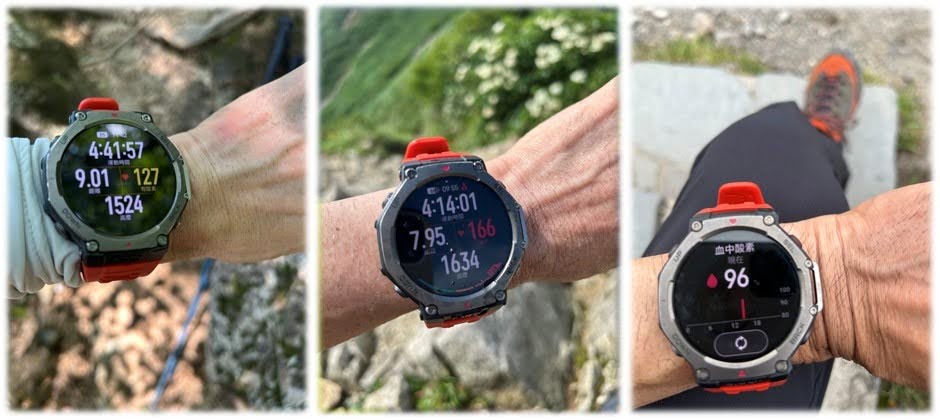
Normal climbing conditions (left); abnormal heart rate (center); blood oxygen level at 2,700m altitude (right)
In startup management, it is obviously important for the CEO to manage their own physical health, but on the other hand, it is equally vital to sense subtle changes in the company’s internal environment.
Casual conversations and greetings have decreased; the office is starting to look untidy; bottom-up information flow has stopped; unexcused absences or resignations with unclear reasons are increasing: all of these are warning signs seen before a company starts to decline.
A business leader must possess not only a strong business sense, but also be able to detect these internal shifts.
Without keeping a finger on the pulse of the company, the CEO may be full of energy, highly motivated, and charging forward, only to look back at some point and realize no one is following, or that everyone else is too exhausted to perform.
A leader must not only look forward but also have the bandwidth to survey the entire organization and not miss minor anomalies. Organizations do not collapse suddenly; they crumble as a result of small, accumulated tears in the fabric.
12. Stay Calm Especially in Emergencies:
Assess the Situation and Make the Best Move
So, what should you do when your extended antennas pick up information or you detect something wrong going on inside you?
In both mountaineering and business management, the worse the news and the more dangerous the signal, the more important it is to stay calm. In mountaineering, you face emergencies born from shifts in both external and internal environments, such as taking the wrong path in thick fog; a sudden downpour; a sprain or bruise on a rocky stretch; or muscle cramps from fatigue.
In startup management, you receive similarly diverse danger signals: dramatic shifts in customer needs due to the spread of AI; the announcement of a merger between competitors; changes in relevant laws; the sudden resignation of a key executive; or a customer data leak.
In such moments, you must absolutely not panic. You are required to maintain your composure, make a careful yet appropriate judgment, and act rapidly based on that decision. Panicking and running around aimlessly can lead you further in the wrong direction, waste precious energy, or make an injury worse.
When a crisis occurs, the first thing to do is calm down, gather information, grasp and then assess the situation. Next, assuming the worst-case scenario, figure out how to keep your business afloat or safely get back down the mountain. Also, once you decide which action to take, move quickly. You have to think deeply, but if you continue to have second thoughts after making a decision, your response will be too late.
I myself once slipped and fell while descending a snowy valley on Mount Gassan. For a moment, my mind went completely blank. However, I quickly regained my composure, crawled to a stable spot, took off my socks, and checked the injured area. Instead of panicking and hastily trying to walk, I assessed my physical condition, calmly determined that I should not continue to climb, and took a solid rest before beginning my descent.
Additionally, on Mt. Kuju, after a successful summit, I was feeling fatigued on the way back down. Combined with poor visibility from fog and a bushy trail that is easy to miss even on a clear day, I repeatedly took the wrong trail. In each instance, I followed the fundamental principle: stop, check my current location, and turn back to the point where I made the mistake. Thanks to this, I avoided any serious trouble.
In both cases, if I had panicked and acted recklessly, I might have made the situation much worse.
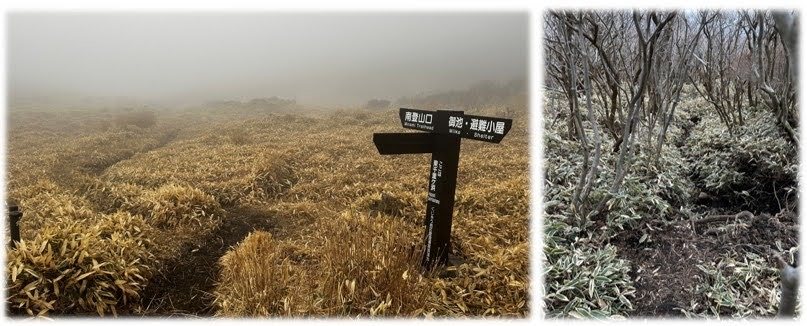
Bushy trails on Mt. Kuju where I lost my way twice
These principles are identical in mountaineering and startup management. When you face a critical crossroads or sense danger, that is exactly when you must respond calmly, determine the best course of action, and execute it.
Japan’s 100 Famous Mountains include many types of peaks, each hiding its own unique dangers. The natural environment changes by the season and the day, just as your own physical condition fluctuates daily. In the case of startup management, as well, the market, competitors, customers, and internal team members are also changing every single day.
Extend your antennas. Pay attention to your vitals. When you detect danger, do not panic; assess the situation calmly. Once you have thought it through and decided on your course of action, rapidly execute the best possible move.
These habits form the foundation for a startup company to survive and achieve exponential growth.
This concludes Part 4 of “Startup Management Lessons Inspired by Japan’s 100 Famous Mountains”.
More than a year has passed since I began this challenge. In the beginning, I started serious mountaineering with some hesitation, but now it’s become something I have the bandwidth to enjoy, appreciating every route and landscape. At the same time, the mountains that I face are gradually becoming steeper, increasing the risk of injury and accidents. Keeping my antennae extended, paying attention to my vitals, and maintaining an unrelenting spirit, I aim to continue this series while tackling each peak one by one.
The next installment is entitled “Balancing Tenacity and Caution”, and will emphasize the importance of having a spirit that never gives up while still being careful.
D-POPS GROUP Advisor Genta Sugihara
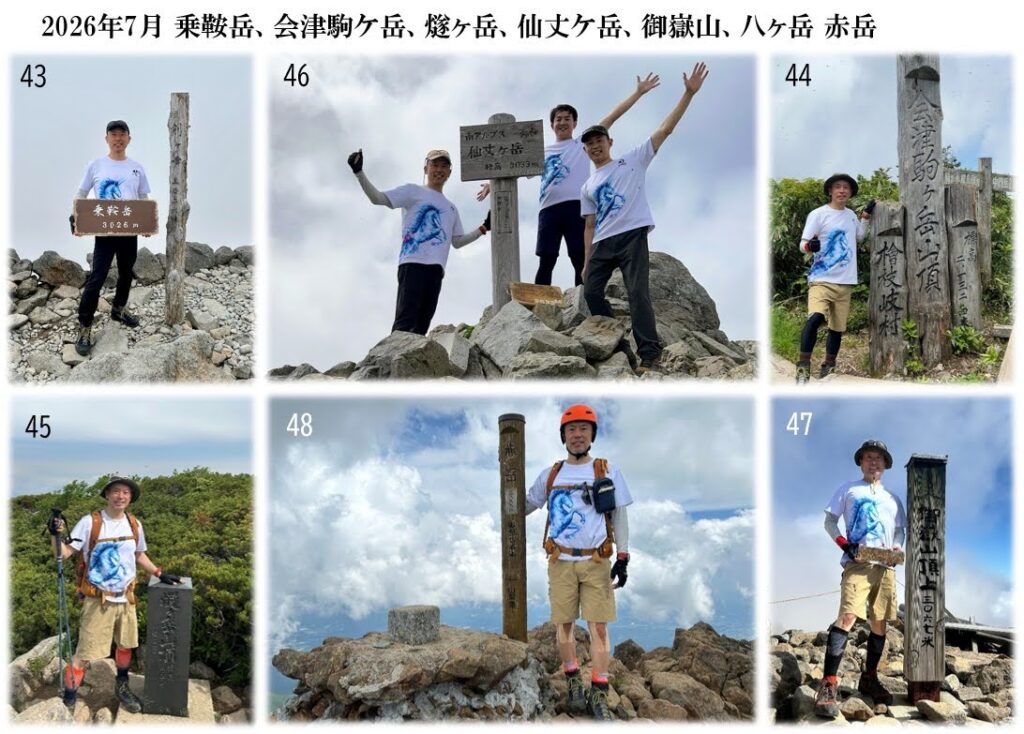
July 2026: Mt. Norikura (#43), Mt. Aizu-Komagatake (#44), Mt. Hiuchigatake (#45), Mt. Senjogatake (#46), Mt. Ontake (#47), Yatsugatake’s Mt. Akadake (#48)