Startup Management Lessons Inspired by Japan’s 100 Famous Mountains, Part 5: Balancing Persistence and Caution
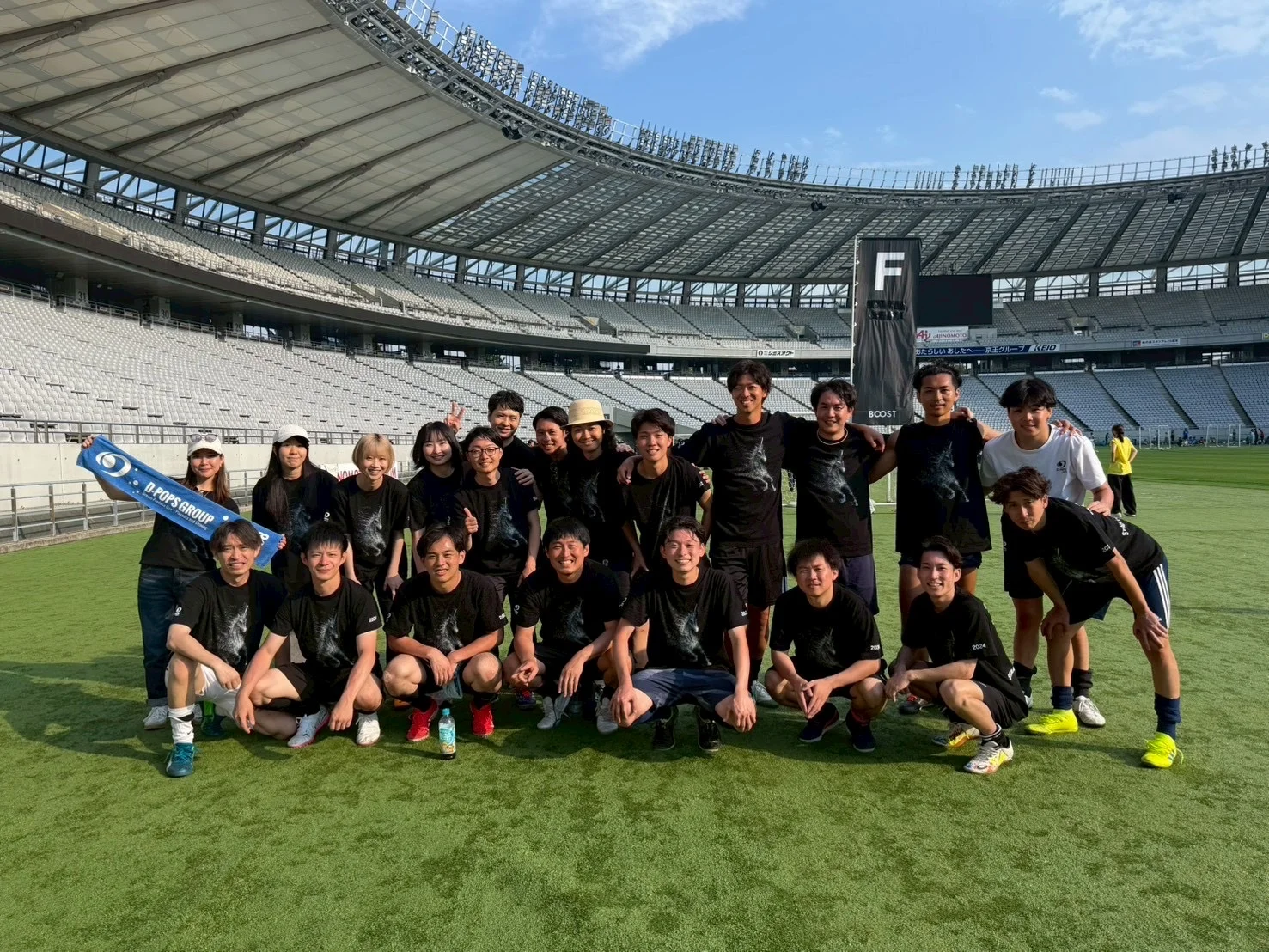
At D-POPS GROUP, our corporate mission is to multiply the number of growth companies (so-called “unicorn companies”) that will revolutionize society, and our core value is to grow and learn together through sincerity, humility, and gratitude.
Ever since setting his goal last summer to “conquer all of Japan’s 100 Famous Mountains while wearing our company’s iconic unicorn T-shirt”, Genta Sugihara, an advisor to our company, has continued climbing mountains across the country, reaching 56 summits as of writing this article. In this series, he reflects on the successes, failures, decisions, and lessons from his journey, drawing parallels to startup management and organizational leadership.
As this challenge enters its second half, Mr. Sugihara has begun attempting mountains he lacked the strength to climb last year. Naturally, this includes an increasing number of peaks that are so hard, it makes you want to quit. During his time at a startup, there were also many difficult moments when he wanted to give up. He recognizes that if he had given up back then, his life would be completely different now. At the same time, he has learned firsthand that reckless action or a lack of caution can be fatal.
In Part 5, we will look at the necessity of having both a persistent, unyielding spirit and a cautious, cowardly mindset in both business and mountaineering.
13. The Paper-Thin Line Between “I Can’t” and “Just One More Step”: Face Hardship with a Persistent Spirit
This is bad...my head is burning. I feel nauseous. My legs have no strength left in them...
My smartwatch shows my heart is racing at over 170 bpm. That is definitely not an optimal number.
It was early August, on the day I challenged Mt. O-Asahi, the main peak of the Asahi Mountain Range in Yamagata Prefecture.
Faced with a steep climb of about a kilometer to reach the summit, I collapsed at the final checkpoint on the trail. An hour earlier, I had gotten cramps in both of my thighs, and by the time I reached that spot, I was suffering from what appeared to be heatstroke, and my body refused to move anymore.
This route, written in my mountain guidebook as an “advanced itinerary with extremely high physical difficulty”, was truly difficult. The temperature that day was extremely high all over Japan, and the weather was already hot and humid when I set out early in the morning. Immediately after starting, I was sweating buckets, and the rugged mountain path with extreme ascents and descents seemed to be endless.
Four hours later, I found myself in the condition written above.
A veteran climber passing by even suggested I descend, telling me, “The mountain isn’t going anywhere.” However, before deciding to retreat, I resolved to stay calm and do everything I could to help my body recover. To replenish my electrolyte levels, I washed down miso soup powder and a rice ball with water, cooled my head with a towel soaked in water from the spring, and lay down on the rocks to rest.
After about 30 minutes, my body temperature and heart rate dropped, and I felt much better. When I collapsed, I felt weak and thought, “I can’t do it.” But as my physical condition returned, so did my willpower, and that thought transformed into, “One step at a time. Let’s just try a few more steps.”
Of course, if my condition hadn’t improved, I should have retreated. Being persistent does not mean ignoring danger and pushing forward recklessly. (I will touch on this point again later).
However, in this case, my condition improved with rest, and I was ready to move forward once again.
After that, I took it one step at a time, eventually reaching the summit of this highly difficult Mt. O-Asahi. Overwhelmed by joy, a sense of accomplishment, and the relief of being freed from fear, I broke down in tears.
(Despite leg cramps and symptoms resembling heatstroke, I managed to reach the summit after resting and recovering)
What was I thinking as I dragged my heavy legs forward?
“I’ve overcome numerous crises in my work before. Situations where I wanted to run away, or when I thought ‘I can’t do this anymore’ and wanted to quit. Every single time, I pushed through with strong persistence, didn’t I? Compared to those struggles, I can manage this. This is where my adventurous spirit shines!”
Once, when I was at a mobile phone company in its launch phase, I worked through endless all-nighters preparing for the release. Immediately after launch, a massive incident occurred where radio waves from the antennas completely stopped, forcing me to deal with a flood of complaints from the agencies I was in charge of.
When Google only had about a 30% market share in Japan, I scrambled to negotiate business alliances with PC manufacturers and major portal sites to take market share away from what was Japan’s largest search portal at the time. Negotiation over conditions became fierce, and almost every week, I had to take things up to the executives over in the US while it was in the middle of the night here in Japan.
If I had given up halfway or run away from those painful situations, I don’t think I would have the fulfilling life I have now.
To the readers, especially the entrepreneurs taking on massive risks, I am sure you have faced countless hardships up to this point. In your memories, there are likely experiences where you think, “I’m so glad I didn’t give up then,” or “I am where I am today because I overcame that crisis.”
There are countless startup companies out there in the world. Many of them try to launch products or services in growth areas or with business models that reflect the era, which inevitably leads to the birth of many similar companies. Yet, the startups that continue to grow and survive are exceptionally rare. What separates a successful startup from one that vanishes halfway?
Management ability, business sense, fundraising skills, personal networks, luck…I believe there are many factors. But among them, a strong will to never give up—that is to say, the persistent spirit possessed by the CEO, the other executives, and every single worker—is one of the greatest factors determining a company’s success or failure.
When faced with a difficult situation, everyone thinks “I can’t do this anymore” at some point. But is it really your limit? Or will the scenery you see, and the results you produce, change if you just take one more step?
The line between “I can’t do it anymore” and “just one more step” is razor-thin.
It is exactly when you face a crisis that the true value of your accumulated efforts and the underlying strength of your organization are tested. Instead of giving up easily, try taking just one more step forward with a persistent spirit. That single step might be the catalyst to overcome a massive wall, leading to your next stage of growth and ultimate success.
14. Be Bold and Adventurous, but Cautious: Do Not Be Ashamed of Cowardice
In the previous section 13, I said to never give up and to push forward with a persistent spirit. However, there is something very important that may sound contradictory at first glance.
Executives and business leaders need a bold, adventurous spirit to forge ahead. But at the same time, they must also be cowardly towards danger and careful enough to stop and think.
The rainy sky suddenly burned bright red.
Elevation: 2,400 meters. This was the sunset seen from Tsurugizawa Hut in Japan’s Northern Alps. Even the mountain hut staff said, “We’ve never seen a sunset this red before.”
It was beautiful. But for some reason, that bizarre redness filled me with a sense of dread.
I had been planning to climb Mt. Tsurugi (elevation 2,999m) the following day, known as one of the most difficult mountains in Japan.
Since that morning, warnings regarding heavy rain, flooding, and landslides had been issued across Toyama Prefecture. By the time I arrived at Tateyama, intense rain was lashing down alongside severe thunderstorms.
Still, believing the weather forecast that said, “The rain will stop tomorrow and turn to a cloudy sky,” I trekked through the heavy rain to reach the mountain hut. Resting in the hut before dinner, these thoughts were running through my head:
“I’m going to climb this no matter what.”“Don't give up, it takes guts.”“Have a persistent spirit.”
But then, I saw that bright red sunset.
It was certainly magical and incredibly beautiful. But to me, it felt almost like a warning message from the mountain god:
“There’s a difference between boldness and recklessness.”“Tomorrow is going to be a truly dangerous day.”“Make a prudent decision.”
So, I chose to see that crimson sky as a red traffic light, telling me not to proceed.
Ultimately, even when morning came, the sky did not clear to clouds as forecasted, and the rain continued to fall.
Mt. Tsurugi is not a mountain where you simply walk up a trail. There are sections where you climb up rock walls, grab onto chains, and carefully traverse sheer drop-offs. If the rocks and chains are wet from rain continuing since the previous day, the level of danger increases dramatically.
Given the situation, not a single climber staying at the hut attempted the summit. Taking the judgment of those around me into account, I made the decision to abandon the summit without hesitation.
(In the center, Mt. Tsurugi is hidden by clouds. The rain didn’t stop the next morning, so I decided to cancel the climb.)
What would my decision have been if the rain had stopped that morning? It still scares me a bit to think about it. Even if it wasn’t actively raining, the rocks would still have been wet from the heavy rain the day before. The rocks I grabbed by hand, the rocks I stepped on, and the chains I relied on would have all been slippery.
If I had forced myself to climb anyway, thinking, “I came all this way,” or “I want to climb this no matter what,” and ended up in an accident, I might have been forced to abandon my 100 Famous Mountains challenge entirely.
Once I descended and calmed down, the thought struck me again.
There is a difference between being bold and adventurous and being reckless.
And one more thought. It is precisely because we have this cowardice and fear of danger that we can connect to our next challenge.
On Mt. O-Asahi, mentioned in the previous section, I confirmed that my condition had recovered through rest, and made the decision to take just one more step. On the other hand, here on Mt. Tsurugi, I assessed the situation and made the decision to retreat for the time being.
There is courage in advancing, but there is also courage in retreating. I believe that calmly evaluating the right course of action is the true meaning of courage.
I believe there are similar situations in business.
Sudden headwinds can batter an industry due to legal revisions, technological innovation, or shifts in global affairs. If a CEO becomes stubborn in such moments, thinking, “This is the policy we decided on, so we’re seeing it through to the end,” and drives the entire company into a dangerous direction, it can lead to an irreversible disaster.
The strategies and tactics that were right yesterday are not guaranteed to be right today. (Refer to Part 3 of this series.)
That is precisely why business leaders need not only the boldness to move forward, but also the sensitivity to detect environmental changes and risks, and the cowardice to stop when they sense danger. (Refer to Part 4 of this series.)
In fact, looking at the books and statements of exceptional business leaders, there is a school of thought that considers ‘cowardice’ to be a necessary trait for executives.
Shoshi Arakawa, the former CEO of Bridgestone, titled his book Strength in Being a Cowardly Executive, and argued in it that timidity and fearfulness are actually tools for surviving in an uncertain world. Similarly, when the global spread of COVID-19 began to throw markets into chaos, Masayoshi Son, founder of SoftBank Group, posted on X: “When facing a storm, it’s better to devote yourself to defense to the point where you’re laughed at for being a coward. I think that is true courage.”
It’s the same, both for climbing Japan’s 100 Famous Mountains and for running a startup company. Courage is not simply thinking optimistically that things will work out and charging ahead boldly. Always prepare for the worst-case scenario (section 4 from Part 2), fear the possibility of risks and failures, and stop if you sense dangerous signs (sections 10 and 11 from Part 4). Then, when you determine you must still proceed, take a bold step forward.
What is required of executives and leaders is not an “either/or” choice between being bold or cowardly. You must possess both of these contradictory traits, wielding the courage to advance and the courage to retreat depending on the situation, in order to sustain your challenge over the long term.
15. The Fallacy of “I’ve Come This Far, So…”: Have the Courage to Discard Sunk Costs
If the rain had stopped on the morning of the planned climb, I might have thought, “Well, since I came all this way...”
In truth, this very way of thinking is another massive factor that disrupts one’s ability to calmly make the decision to retreat.
I had been planning that climb for months, booked my stay in two different mountain huts, and finally arrived in Toyama—far from my home—after taking multiple overnight buses, sinking a considerable amount of time and money into each step. Then, I hiked up to the mountain hut at an elevation of 2,400 meters in the pouring rain, carrying a heavy backpack.
“I went through all this to reach this point. Am I really going to turn back with the summit right in front of me?”
Such thoughts were going around inside my head.
In economics and business administration, these costs that have already been paid and cannot be recovered are called ‘sunk costs’.
While a veteran climber would see those poor conditions and easily make a judgment, an inexperienced climber like myself was hindered from making an immediate decision by my bold and adventurous spirit—which, at that moment, was actually a reckless sense of competition—along with the sunken cost fallacy.
On the front lines of business management—especially at startup companies—there are many situations where sunk costs negatively affect your judgment.
Deciding whether to retreat or pivot an unprofitable business. Deciding whether to release a new product or business even though a critical issue was discovered. Deciding whether to hire a highly capable candidate who has doubts regarding the company’s philosophy and values.
During executive discussions at such moments, what happens when you focus too much on sunk costs, saying things like, “Since we’ve already invested this much,” “Since we’ve worked this hard,” or “Since we’ve spent so much time on this”?
It can lead to irreversible management decisions such as failing to retreat from an unprofitable business and expanding losses; launching a new business or product while harboring potential issues; or hiring personnel who do not fit the organizational values, creating friction down the line.
To avoid this, when making critical decisions, executives must be highly conscious of whether they are falling into the sunk cost trap, and make calm, rational judgments.
Do not give up when you shouldn’t. But when you should give up, gracefully retreat without letting yourself be trapped by the time, money, and effort you have spent up to that point. I believe that being able to do both is the true essence of having a persistent spirit while wielding cautious judgment.
This concludes Part 5 of “Startup Management Lessons Inspired by Japan’s 100 Famous Mountains”.
Over a year has passed since this challenge began. I chose to call this series “Startup Management Lessons Inspired by Japan’s 100 Famous Mountains”, but if you look behind the scenes, my true intention was to prove a point: “If I apply my startup management experience to mountaineering, even an amateur climber can conquer the 100 Famous Mountains in a short period.” So far, I believe that experience has been put to great use.
The next installment is entitled “Learn from Failures and Continue to Grow”, and will explore what it means to continuously grow by gaining experience, accumulating training, and learning one step at a time.
For those who have not yet read the previous articles in this series, please check them out here:
Part 1: Define Your Summit, then PreparePart 2: Detailed Planning, Steady ExecutionPart 3: Strategy, Tactics, and ExecutionPart 4: Extend Your Antennae, Pay Attention to Your Vitals
D-POPS GROUP Advisor Genta Sugihara
August 2026:Mt. Gassan (#49), Mt. O-Asahi (#50), Mt. Zao (#51), Mt. Fuji - Kengamine (#52), Mt. Hakusan (#53), Mt. Yotei (#54)