

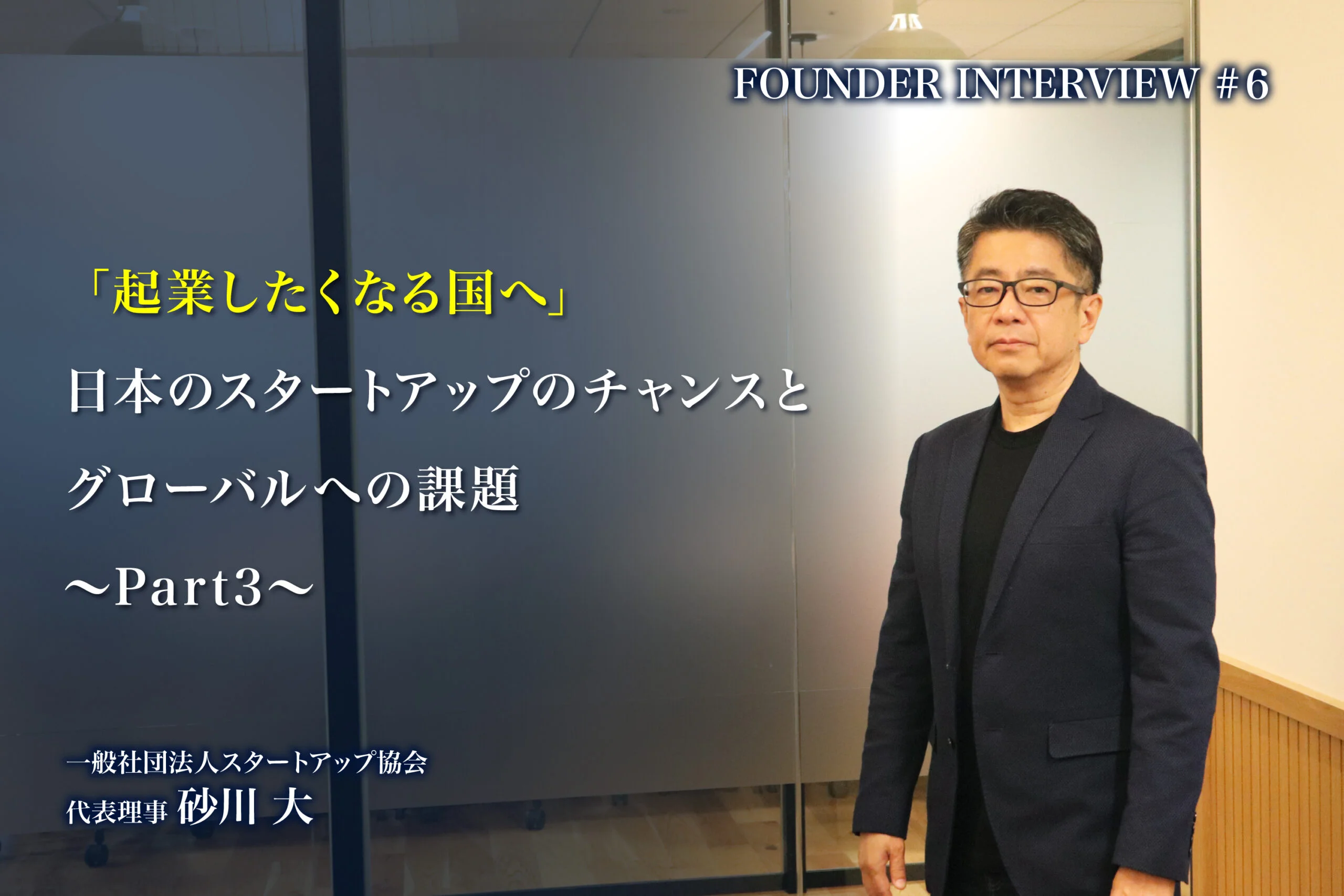
Creating a Society that Wants to Start Businesses:
Opportunities for Japanese Startups and Challenges in Going Global
In Part 3, the final installment of this three-part interview series, Masaru Sunagawa speaks candidly about the current state of Japan’s startup landscape. He reflects on how times have changed: in the past, leaving Mitsubishi Corporation to join a startup would’ve invited criticism, but today, it’s common for students at the University of Tokyo to launch their own companies. Yet, he also addresses the structural reasons why Japan has not caught up with the United States. Furthermore, as generative AI reshapes every profession, what human element will remain? Finally, Sunagawa shares his resonance with D-POPS GROUP’s vision of realizing a Venture Ecosystem. (This interview was conducted in May 2026.)
◆“Having Lunch with People I’d Added on Facebook but Hardly Ever Speak to”: How to Build a Wide Network
Sugihara:
Looking at your Facebook posts, you clearly have a broad network of influential leaders across various fields. How did you come to meet those individuals, and how have you come to grow the number of people you associate with?
Sunagawa:
I wasn’t posting on Facebook at first. By the way, these are all lunch meetings. Dinners usually involve alcohol, tend to drag on, and start feeling inefficient to me. But with lunches, both parties stick strictly to a one-hour window. It keeps conversations focused, concise, and highly efficient. I realized that lunch is actually far better.
Sugihara:
These people you’re getting lunch with…are they people you already knew?
Sunagawa:
They were existing contacts. But at some point, I started a personal project: having lunch with people I’d added on Facebook but hardly ever speak to. It felt like a waste to be connected without actually engaging. Since I only accept friend requests from people I’ve met in person, I have definitely met all of my Facebook friends at some point in the past. But for some contacts, I can’t quite remember who they are or where we met. So, I’ll message them that I honestly don’t quite remember who they are, but ask if they want to go for lunch, ha ha.
After getting together with these contacts, I end up having fascinating conversations with people from mountaineers to fortune tellers. Once I started posting about these lunches on Facebook, other connections began reaching out asking, “Would you like to have lunch sometime?” My network expanded organically from there. I didn’t start this to boost my personal branding, by the way.
Sugihara:
Has this project impacted your company or your association positively?
Sunagawa:
Even though I didn’t plan it that way, of course it does have a positive effect. I don’t believe society operates only on a direct, transactional basis. If you help someone, they might mention your name elsewhere, another person may become interested in you, and an opportunity will come back to you serendipitously. That happens spontaneously, but I never count on it deliberately.
◆From an Era Skeptical of Entrepreneurship to UTokyo Students Launching Startups as the Norm: Japan’s Rapidly Evolving Environment
Sugihara:
In recent years, the Japanese government has significantly raised its commitment to supporting startups. An increasing number of top-tier students are choosing to found their own companies or join startups full-time after interning there, rather than taking traditional corporate jobs. As someone who has built multiple companies and achieved successful exits, how do you view today’s environment?
Sunagawa:
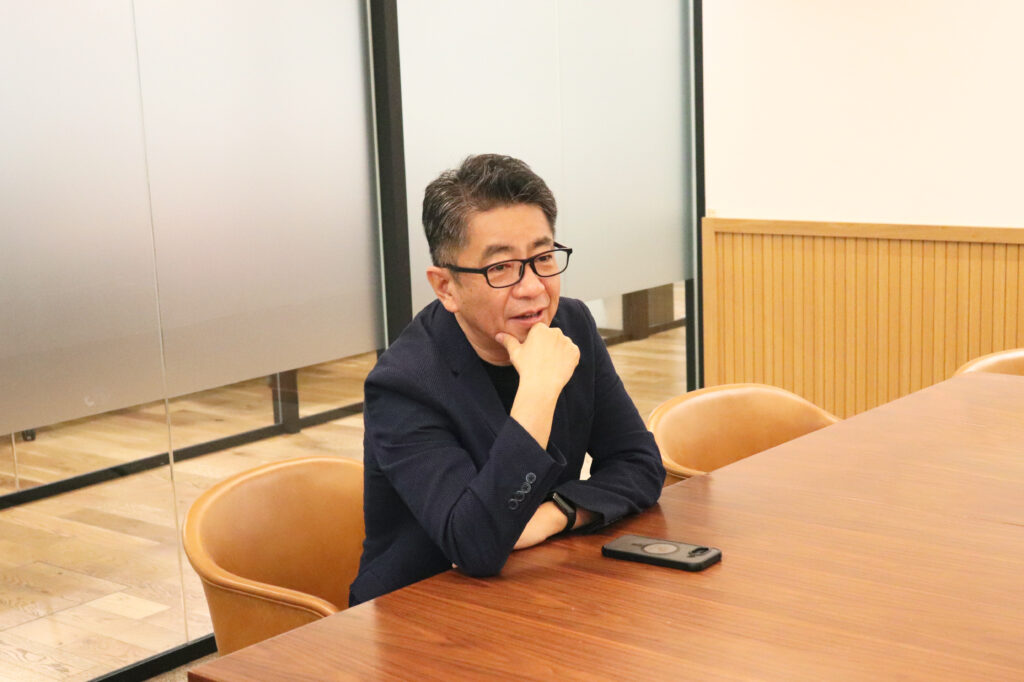
It is buzzing with incredible momentum. Back when I was running LocationValue, people reacted with total disbelief: “You’re seriously leaving Mitsubishi Corporation to start a business?” or “Did you do something to get kicked out?” I was treated almost like I had committed a crime, ha ha! I don’t want to speak ill of my associates of that time, but starting out was truly difficult—it felt like the business world was a total zoo.
Today, graduates from the University of Tokyo naturally come to work at our company, and many found their own startups even before graduating. I expect that trend to accelerate even further. Starting a business has become vastly more accessible.
Sugihara:
The talent landscape is shifting, and entrepreneurship is becoming a natural choice. How many more years do you think it will take Japan to catch up to other countries?
Sunagawa:
Unfortunately, we’re not catching up yet. I believe it is a structural issue. First, talent mobility in Japan remains abnormally low.
Second, regarding rulemaking: the U.S. operates under a federal system where corporate law is determined at the state level. States actively compete against one another to attract startups. This built-in competition naturally drives continuous improvements to startup-friendly regulations. Elon Musk relocating his companies to Texas, or businesses leaving California due to tax hikes—these are direct outcomes of state-level market dynamics.
Japan operates under a centralized system, so competitive principles don’t apply as easily. As a result, while the U.S. advances through constant trial and error, Japan remains anchored to traditional corporate law without changing. Right now, we are debating issues like the global minimum tax: under certain conditions, exiting a company in the U.S. might incur zero exit taxes, whereas in Japan, an entrepreneur could face hundreds of millions of yen in taxes. Given that choice, where to incorporate is obvious. Our association argues that this friction directly contradicts the core vision of the government’s Startup Development Five-year Plan.
◆Opportunities and Challenges: How Do We Step Up from Competing at the Micro Level to Expanding Globally?
Sugihara:
In simple terms, what do you see as the key opportunities and challenges facing Japanese startups today?
Sunagawa:
The opportunities are nearly countless. On a micro level, the competitive environment within Japan isn’t overly fierce. For instance, our service has around 20 competitors in the U.S., but in Japan, Smartround stands alone as the dominant player. Operating costs in Japan are also lower when exchanged from key foreign currencies, and even if you do the same thing as in other countries, there’s plenty of potential to succeed in Japan. Additionally, the quality of human resources and the level of dependability here are excellent. Having lived in countries like the Philippines, Mexico, and the U.S. during my childhood, I can confidently say that Japan has an abundance of highly skilled, diligent, and trustworthy people. There is ample opportunity to build businesses that scale reliably.
On the flip side, the biggest hurdle is expanding into the global market. In Japan, startups can achieve moderate success domestically even without a high level of competition. If founders settle for that level of growth, they rarely develop globally competitive services. That said, I expect at least the language barrier to largely disappear within the next two to three years, since AI can perform simultaneous interpretation.
A lot of people talk about the importance of going global, but much of it is just shouting from the sidelines. It’s one thing if it comes from someone who has actually expanded internationally, but yelling advice without ever stepping up to the batter’s box changes nothing. Real change won’t happen unless we bring in truly successful U.S. entrepreneurs to serve as active advisors for Japanese startups. At Smartround, we asked the founder of a U.S. gaming company with a great track record to be an angel investor, and we value his counsel because the perspective he brings is entirely different from ours.
◆“Sell Pickaxes in a Gold Rush”: The Growth Markets Japan Should Target in the Era of AI
Sugihara:
What sectors could be considered promising growth markets for Japanese startups in the future?
Sunagawa:
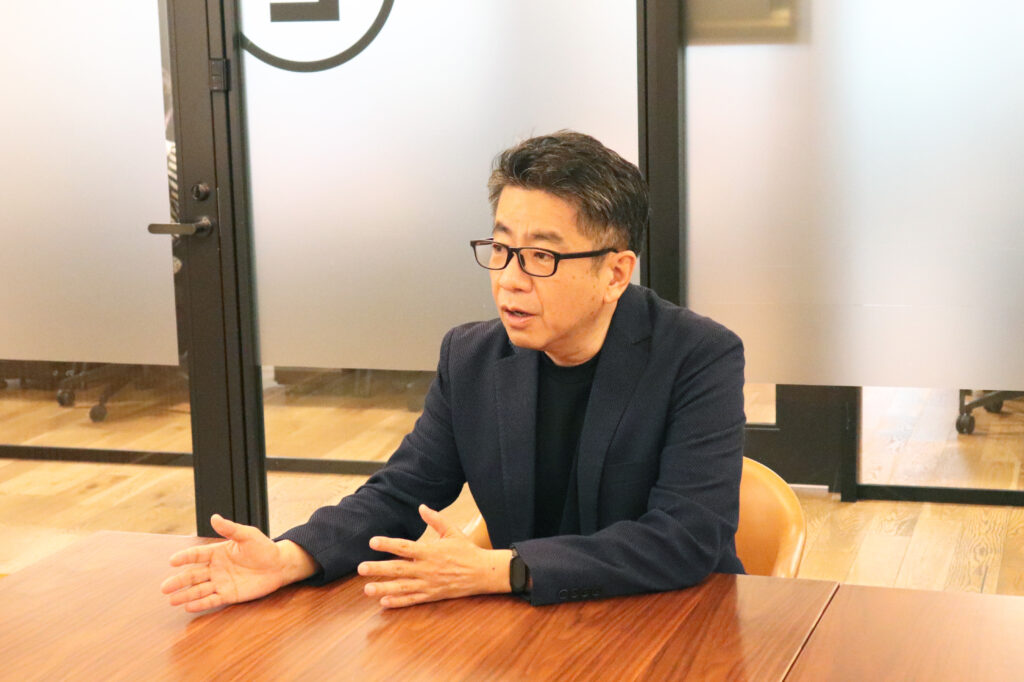
I believe a growth market isn’t something that already exists, but rather, something we must proactively pioneer. Today, the whole world is being laid out according to AI. For example, I think Gemini is so strong because Google operates its own power plants and engineers its own custom TPUs. In contrast, players like Anthropic and OpenAI must purchase power from external providers and buy GPUs from NVIDIA, so they have not achieved full vertical integration. Only Google has been able to achieve that.
As the saying goes, “During a gold rush, don’t dig for gold—sell pickaxes.” We need to ask ourselves what the “pickaxes” of the AI era are. The answer is energy and chipsets. Nuclear fusion will be absolutely critical. To establish a competitive edge, Japan shouldn’t spread its capital thin across a bunch of areas, but rather, we must double down and concentrate our resources boldly.
◆Which Jobs Will Vanish and Which Will Endure in the AI Era: The Honest Dilemma of Career Advice for My Son
Sugihara:
The rise and integration of generative AI are drastically transforming the corporate landscape. Which professions do you see disappearing, and which will survive?
Sunagawa:
That is an exceptionally tough question. Honestly, I sometimes wonder if any traditional role will remain entirely untouched. When Anthropic released financial capabilities for Claude, it instantly evaporated the primary job of entry-level investment banking analysts building financial models, and their agent Claude Legal will certainly put pressure on lawyers. What’s striking is that AI tools seem to specifically target lucrative, high-paying white-collar professions. If those all get automated, it feels like no jobs will be left.
I struggled deeply with this when giving career advice to my son. I’ve built a career through Mitsubishi Corporation and a subsequent MBA from Harvard, interning at VC firms, and exposure to top investment banks like McKinsey and UBS. But when looking at a future where many of those roles could be automated, giving career advice is no longer so straightforward, ha ha!
In the end, he decided to join a Japanese general trading company (sogo shosha). I think that was a great choice, because at its core, the work of connecting human beings is something AI cannot replicate. Moving people’s hearts, creating genuine emotional resonance, and building a deep level of trust with someone—AI cannot understand eye contact, physical presence, or interpersonal chemistry. That uniquely human domain is what will endure.
◆“Change Is Impossible Unless We Work Together”: On Realizing a Venture Ecosystem
Sugihara:
Finally, D-POPS GROUP’s aim is “realizing a Venture Ecosystem”. What aspects of that vision resonate with you, and where do you see opportunities for collaboration?
Sunagawa:
At the Startup Association of Japan , we have zero intention of trying to beat out anyone. On the contrary, we firmly believe that real systemic change is impossible unless we work together. As I mentioned earlier, our approach is all about open collaboration across every organization. We remain free to partner with anyone. Anyone who shares this desire and wants to elevate Japan’s startup ecosystem—even by a single millimeter—is a kindred spirit of ours, so please join us!
Interview conducted by D-POPS GROUP’s advisor Genta Sugihara.
Professional Background:
Masaru Sunagawa, Representative Director of the Startup Association of Japan, President and CEO of Smartround Inc.
After working at Mitsubishi Corporation and obtaining a MBA from Harvard, he worked as a director at a US venture capital firm. After returning to Japan, he founded LocationValue Co., Ltd., and sold it to NTT DOCOMO. After serving as the managing director for Android at Google, he founded Smartround Inc. in 2018. In 2022, he established the Startup Association of Japan and became its Representative Director. He works on developing Japan’s startup ecosystem, and was even involved in the compilation of the “Startup Development Five-year Plan”.
Startup Association of Japan: https://www.startup-kyokai.org/
Smartround Inc.: https://jp.smartround.com/corporate
Please check out Part 1 and Part 2 of this interview if you have not already!