



At D-POPS GROUP, our corporate mission is to multiply the number of growth companies (so-called “unicorn companies”) that will revolutionize society, and our core value is to grow and learn together through sincerity, humility, and gratitude.
Genta Sugihara, who serves as an advisor to our company, set a goal for himself: “Conquer all of Japan’s 100 Famous Mountains while wearing our company’s iconic unicorn T-shirt.” Balancing his work commitments, he travels to mountains across the country on weekends, having summited 48 peaks as of writing this article. In this series, we reflect on the successes, failures, judgments, and lessons from his journey, drawing parallels to venture management and organizational leadership.
In Part 1, we discussed the importance of defining your vision and making the necessary preparations to achieve it.
In Part 2, we covered detailed planning and focusing on steady execution along the trail.
In this third installment, we will explore the respective meanings and importance of strategy, tactics, and execution in business, comparing them to the challenge of conquering the 100 Famous Mountains.
7. Formulate a Strategy First: Launching a Startup Without a Business Strategy is Reckless
Last summer, when I set my goal to “Summit all of Japan’s 100 Famous Mountains by around 60 years old”, I immediately began thinking deeply about how to actually achieve it. To accomplish this around age 60, I needed a plan to finish within three to four years, by about the time I turn 62. However, I wondered: Can an amateur who has only hiked low hills really climb 100 mountains across Japan—including extremely difficult peaks—in such a short timeframe?
So, I first gathered information on every single one of those mountains from various books and media:
・What are their elevations and difficulty levels? (There are publicized trail difficulty metrics for the mountains in Japan, known as “course constants”.)
・What is the specific climbing season for each mountain? (Many peaks are impassable or dangerous in winter.)
・Which mountains can be climbed back-to-back? (Some can be traversed together or accessed on consecutive days by driving.)
・Which mountains should be climbed sooner than others? (To gain experience or appreciate the appeal of mountain climbing.)
Once that research was complete, I devised the following strategies:
1. Start with mountains that have lower course constants, gradually building up knowledge, technique, and physical stamina.
2. Summit the mountains scattered across various regions first, leaving the highly challenging Japanese Alps for the second half.
3. For regions requiring significant travel time, like Tohoku or Kyushu, climb multiple mountains in a single trip.
4. Prioritize scheduling mountains with limited seasonal windows, making sure to book accommodations and transportation early.
5. Train my body, identify the challenges, and learn about required gear as I gain experience.
Based on this strategy, I mapped out when I would climb each mountain over the next three to four years, which peaks to group together, and what transportation to use, recording everything in atlases and note apps. Then, for the mountains scheduled for 2025, I created individual detailed plans—as described in the previous article—taking into account transportation methods, travel times, climb durations, and difficulty levels.
So far, I have climbed 48 peaks. Today, simply looking at the course constant and contour map of a mountain gives me a clear idea of its difficulty. I have also learned the patterns of how I get fatigued and how I can best recover.
Although I’ve climbed nearly half of the 100 mountains, I know that the most difficult peaks were saved for the second half. The real test—the climax of this challenge—begins now. However, I am now confident in the correctness of this strategy, and I feel fully prepared to take on the challenging mountains that lie ahead.

A list of every mountain, showing its course constant value and elevation (left); my 3 to 4 year climbing arrangement (right)
In the same way, gathering sufficient information, reflecting deeply, and formulating a strategy before creating detailed plans is the single most critical activity in managing a startup company.
Startup founders often fall into the trap of thinking, “If we make a good product, it will sell.” In reality, your strategy—defining who you target, in which market, and through what sales channels—heavily dictates the outcome. Pricing is also a key component of this strategy.
In growth markets or areas with clear unsolved social issues (opportunities), there will either already be incumbent players (threats) or competitors will inevitably enter the field later. You must clarify how your own strengths and weaknesses weigh against these factors to build your strategy. Furthermore, to align the entire team in the same direction, you need clear milestones for revenue and customer acquisition after a set period.
For founders and executive teams, thinking about strategy day and night is one of the most essential steps in the early stages of a startup.
Of course, once you enter the execution phase, shifts in the internal or external environment may force you to realign your strategy. But starting and running a business purely on gut feeling, without any strategy at all, is sheer recklessness.
Behind every successful business is a strategy that the management team considered so thoroughly, their heads felt like bursting.
Japan’s 100 Famous Mountains cannot be conquered with only enthusiasm. Neither does a business grow purely on passion. If you aim for a high and steep summit, start by creating a strategy. The challenge begins before you take a single step on the trail.
8. Equipment that Covers Your Weaknesses: Tactics Based on Self-Awareness Increase Your Chances of Success
Before I was crazy about mountain climbing, my hobby was going to the gym, where I focused mainly on upper-body strength training. As a result, my heavy, muscular torso pulls my center of gravity up high. Moreover, because I was slim as a child, I have a narrow skeletal frame with thin lower legs, knees, and ankles that get injured easily. In other words, my balance and body type are not particularly suited for mountaineering.
Following the strategy outlined earlier, I started with the mountains that were flatter and easier…but even so, I frequently experienced knee pain when descending.
So, I devised the following tactics: relying on trekking poles and upper-body strength, and always protecting my knees and ankles with taping, regardless of what mountain I’m climbing.
When I first started hiking, I thought, “It looks cooler to not use trekking poles.” But that was the wrong mindset for me. The correct decision was to swallow my pride, acknowledge my weak knees, and choose tactics tailored to me.
Now, when I climb, I always use trekking poles and rely on my upper-body strength. I also researched various taping products and wrapping techniques to arrive at my current climbing style. Thanks to these tactics, I almost never suffer from knee pain anymore, enabling me to take on challenges like climbing three of the 100 Famous Mountains on three consecutive days.
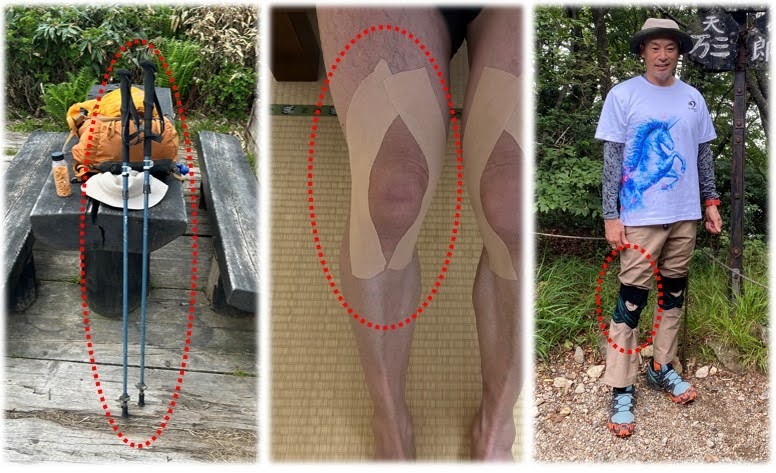
The trekking poles I always rely on (left); knee taping for injury prevention (center); knee braces for steep descents (right)
Then, what about tactics in business management?
Just like when I was a beginner hiker, early-stage startups do not possess everything right from the start. Some companies are weak in sales; others lack financial capital. That is precisely why understanding your weaknesses and developing tactics to compensate for them is essential.
Tactics are specific, creative solutions designed to cover your weaknesses and maximize your strengths. For example:
・If the CEO is an engineer confident in building dev teams but weak in sales, hire an experienced head of sales.
・If the entire team is young and inexperienced, making it hard to gain trust, bring on well-known advisors with rich track records and networks across industries.
・If lagging behind leading competitors in capital and talent, form strategic partnerships with big corporations.
In reality, tactics will vary depending on product lines, a company’s growth stage, and market positioning. Unlike overarching strategies, tactics are something you construct as you execute, continually coming up with the best option for each moment. To do this, you must not turn a blind eye to your company’s shortcomings. Rather, you must constantly think about how to compensate for them. This requires true resolve from the founder to make tough decisions.
In mountaineering, trekking poles and taping are not signs of weakness. They are tactics rooted in self-awareness to offset vulnerabilities.
The same holds true for business. A strong company is not one with zero weaknesses; it is one that understands its weaknesses and deploys the right tactics to overcome them.
9. Get Comfortable with Your Equipment:
Familiar Tools Are Essential for Execution
Once you have a well-crafted strategy and tactics tailored to your strengths and weaknesses, you finally head out onto the mountain. In mountaineering, you select different equipment depending on the mountain type, season, and weather.
Of course, that includes rain gear and headlamps, but you must also choose high-cut boots and gloves for rocky terrains, helmets for areas prone to falling rocks, and chain spikes, crampons, or ice axes for snowy mountains. I personally choose between four or five different pairs of hiking boots depending on the mountain.
However, simply preparing the required gear does not mean you are ready to use it.
In practice, being proficient with your gear is much more important than merely having it.
Whether it’s new boots, crampons you’ve never used, or new trekking poles, you should only tackle a real mountain after becoming thoroughly accustomed to your gear.
I learned this the hard way. I once climbed a tough snowy mountain in a pair of boots I hadn’t gotten used to, and then I slipped and sprained my foot. I had thought, “They’re new, so they must be safer than my old pair.” That was a mistake. Muscle memory matters far more than the equipment’s performance on paper.
Even if your strategy and tactics are spot on, you will lose winnable opportunities if you aren't ready for action.
A glove for a baseball player, cleats for a soccer player, and climbing gear for a mountaineer—you can only prepare for difficult challenges by mastering tools you are accustomed to using.
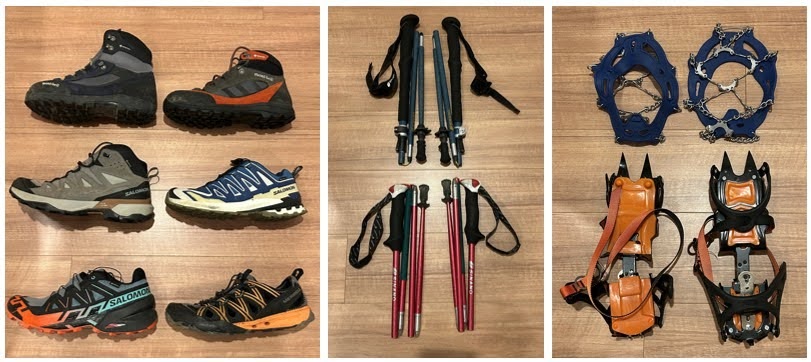
Familiar hiking boots (left); my indispensable trekking poles (center); and crampons I haven’t gotten used to (right)
Being comfortable with your tools, beyond just having them, is equally vital in startup management.
・For a sales pitch, practice role-playing until it becomes muscle memory.
・For an AI tool, test it thoroughly before adopting it as a core asset.
・For a new sales method, test small before expanding across the entire company or client base.
・For a new company policy, rehearse operating according to it before fully rolling it out.
If you throw untested proposals at clients, write critical reports with AI tools you haven’t mastered, or introduce trendy internal policies without preparation, your overall readiness for action will not improve—no matter how sound your strategy or appropriate your tactics may be.
Mastering an AI tool is not a strategy in and of itself. Establishing winning sales patterns is not a tactic in and of itself. Rather, these are examples of capabilities that can be used to execute strategy and tactics on the front lines.
These are simply means to increase efficiency and win rates and advance your business. Yet, when every team member masters their tools, even a team without star individual performers can produce extraordinary results.
For early-stage startups that are small, lack brand credibility, and operate on limited resources, the key is to build on a solid strategy, adapt tactics based on self-awareness, and continually refine each individual’s readiness for action to drive the business forward.
We can summarize strategy, tactics, and execution in startup management as follows.
Strategy is the overall blueprint to reach your target peak.
Tactics are choosing the best way to fight, factoring in your own strengths and weaknesses.
Combat is about the ability to reliably carry out strategy and tactics on the front lines.
When these three elements are operating smoothly together, you can tackle a difficult mountain peak or a highly-competitive business market.
This concludes Part 3 of “Startup Management Lessons Inspired by Japan’s 100 Famous Mountains”.
Having completed nearly half of my goal, I will be taking on increasingly steep and rugged mountains from here on out. Taking utmost care to avoid further injury, I will continue moving toward the finish line, one peak at a time, with an unrelenting spirit, and bringing you honest updates through this series.
In the next installment, “Extend Your Antennae”, we will explore paying close attention to external and internal environments, as well as making critical decisions at crucial junctures.
D-POPS GROUP Advisor Genta Sugihara
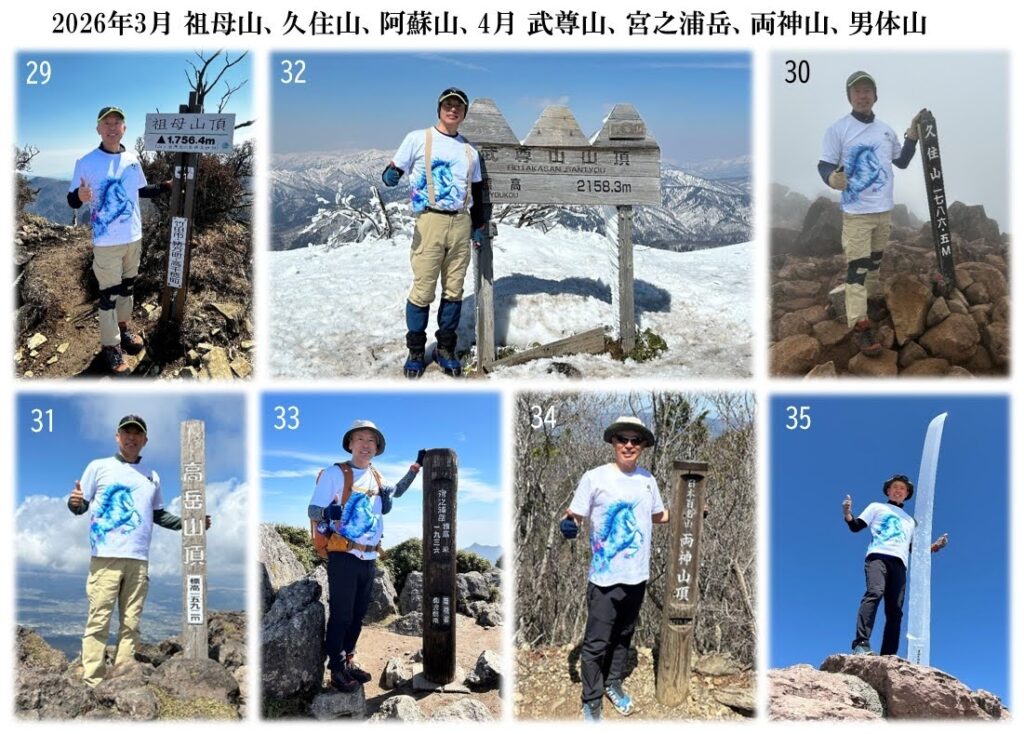
March 2026: Mt. Sobo (#29), Mt. Kuju (#30), Mt. Aso (#31);
April 2026: Mt. Hotaka (#32), Mt. Miyanoura (#33), Mt. Ryokami (#34), Mt. Nantai (#35)
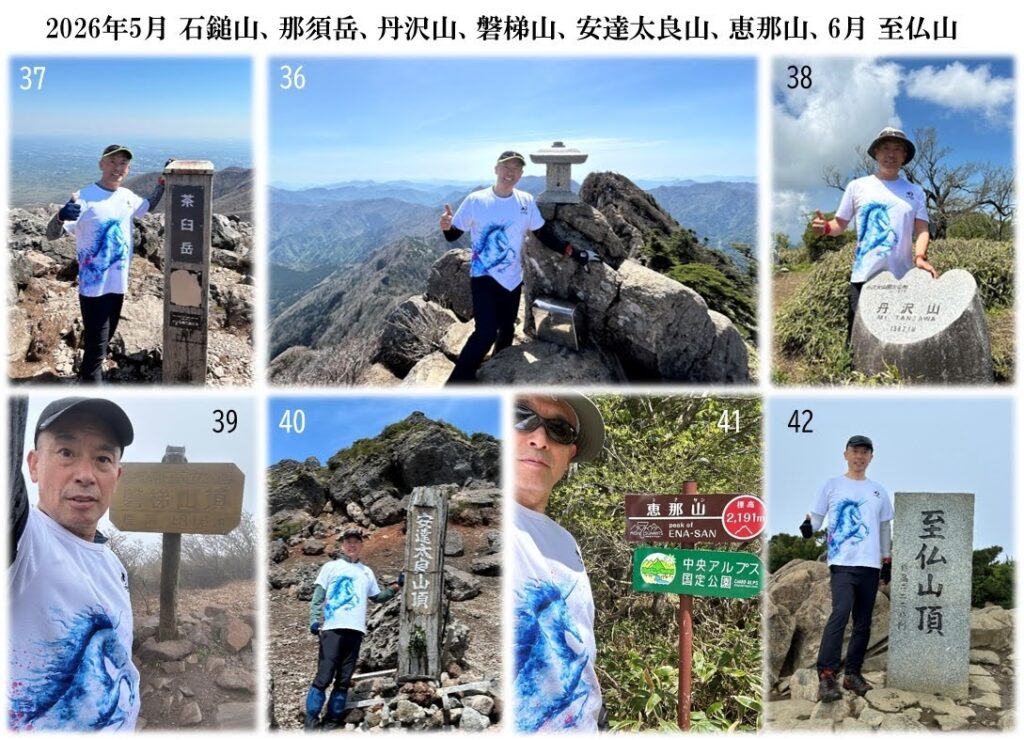
May 2026: Mt. Ishizuchi (#36), Mt. Nasu (#37), Mt. Tanzawa (#38), Mt. Bandai (#39), Mt. Adatara (#40), Mt. Ena (#41);
June 2026: Mt. Shibutsu (#42)