

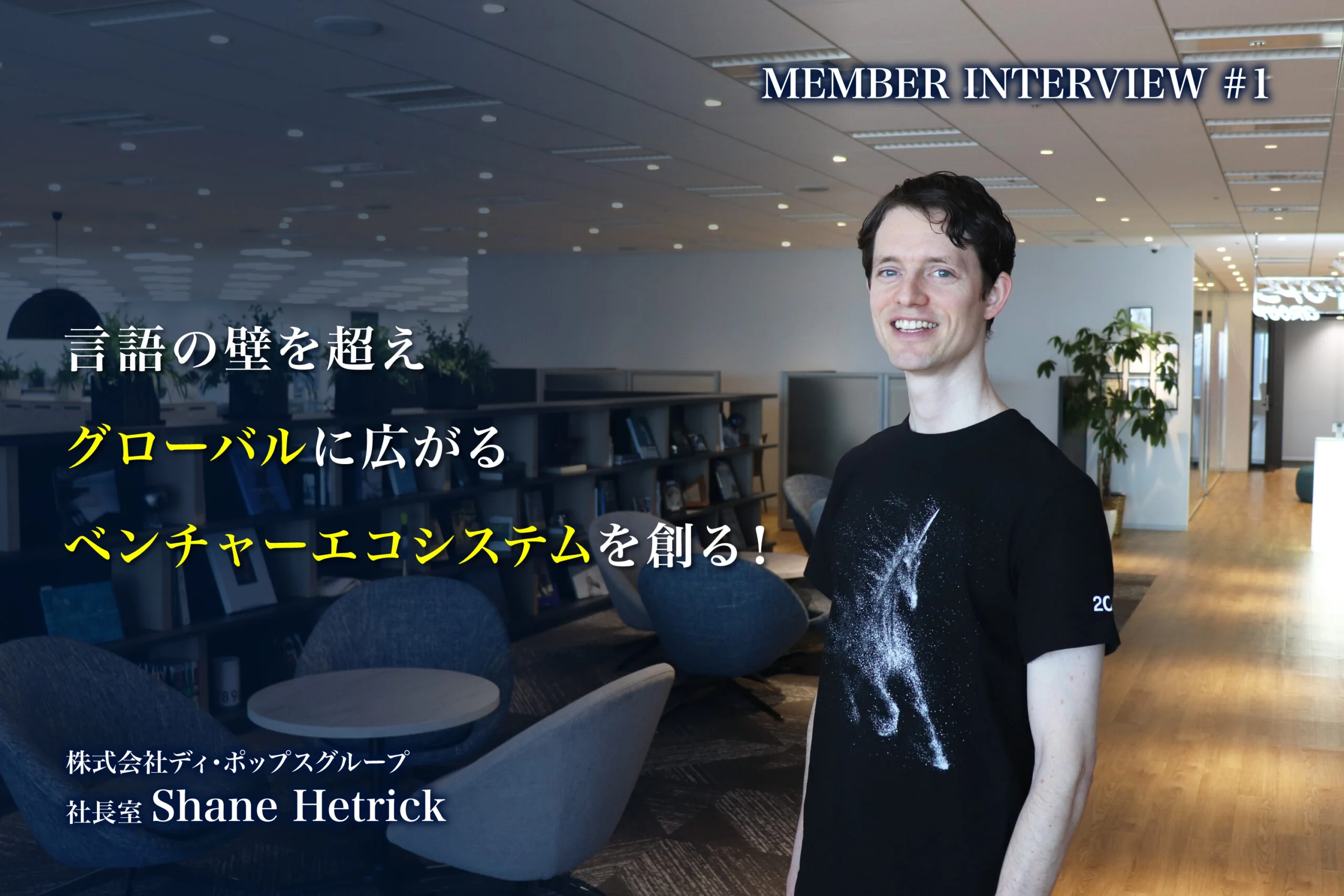
Overcoming the Language Barrier to Create a More Global Venture Ecosystem
①First, please tell us about where you’re from and your background.
I was born in California, but while growing up, my family moved about a dozen times to various other places in the western part of the US as well as spending seven months in South Korea. As a result, my parents, my younger brother, and my two younger sisters were the only stable figures in my life, so I had to get used to constant change from an early age. In fact, I can confidently say that learning how to deal with so many transitions had a significant impact on my life.
After moving to the city of Pullman in Washington to attend Washington State University, I earned a dual degree in microbiology and genetics and cell biology. In my freshman year, I became an active member of a Christian community for university students, and even after finishing my studies, I decided to remain in Pullman and volunteer with that group for two years as an intern and then one year as a staff member.
Throughout this period, I enjoyed getting to hang out with friends often, not having many responsibilities, and ultimately realizing my life’s passions. I also gained a number of critical skills which I would soon utilize in my career: developing relationships with people from both similar and different cultures, guiding and coaching university students through strategizing how to tackle their personal problems, facilitating group discussions, and—perhaps most importantly—learning how to learn.
②How many years ago did you arrive in Japan? What was your reason for moving here?
Towards the end of my time in Pullman, I started to meet more and more international students from various countries, and even met a student from Kansai Gaidai University in Japan, who even became my roommate for one semester. All of them suggested very seriously that I would make an excellent English instructor, and I became quite interested in the idea of starting a brand new adventure. Looking back on it now, I suppose I had also grown restless in my relatively safe and predictable life.
First, I began working part-time at my university’s affiliated TEFL (Teaching English as a Foreign Language) program for about half a year, and then started to look into different options to live abroad as an English instructor. In the end, I was offered a full-time position as a dispatch worker through a small English teaching company in Japan, and in August 2015, I moved into a Japanese family’s house in Tokyo. I had met their son while he was studying abroad at my university, and his parents graciously offered me a place to stay when they heard I would be moving to Japan.
I began facilitating English lessons at elementary and middle schools, trade schools, hospitals, hotels, and various other companies throughout the Tokyo area. Some were large classes with 10 to 20 children or young adults, while others were 1-on-1 with businesspeople, and I soon became capable of teaching English to Japanese people of all ages.
③Why did you join D-POPS GROUP?
During my first year of teaching English full-time in Tokyo, I encountered a local branch of the same Christian university student organization in which I had been involved before. They were low on staff, so I volunteered for them and moved into their community house while continuing to teach English part-time at various places. I met a young woman from China through this group, we got married, then we had a daughter and were expecting a baby boy.
During the months leading up to his birth, I was actively searching for a full-time job to provide for our family's finances, since my wife would soon go on maternity leave and she was our main breadwinner at the time. Then, a recruiting partner of D-POPS GROUP found my profile while looking for someone with English teaching experience and a Japanese driver's license to be hired as an English-speaking chauffeur for the CEO, and offered me an interview.
While I was somewhat intrigued by the prospect, the position was very different from what I had been searching for. However, once I met President Goto at the interview, something inside me changed. I was deeply impressed by how he listened to me and was genuinely interested in me as a person, and when he spoke, I immediately believed in his vision. So, last November, I decided to join D-POPS GROUP and play even a small part in creating a society that will support my children to take risks, learn, and grow.
④What kind of work are you doing at D-POPS GROUP?
I was originally hired to help President Goto to improve his English through natural conversation while riding in the car. While that is my highest priority, I quickly recognized that within the flexible and swiftly-changing scene of a startup, I couldn't limit my role in our company to such a narrow task.
When I’m not driving, I was given the primary task of translating the articles on our company website from Japanese to English. From time to time, I also get to use my native English skills for corresponding with foreign guests and welcoming them to our office.
As much as I can, I try to help out the other members of the President's Office, too. After all, the more work they can delegate to me, the more work President Goto can delegate to them, which frees him up to do more of the things that only he can do. I receive and send letters and packages, order various supplies, issue entry passes to our office, and handle other light administrative tasks.
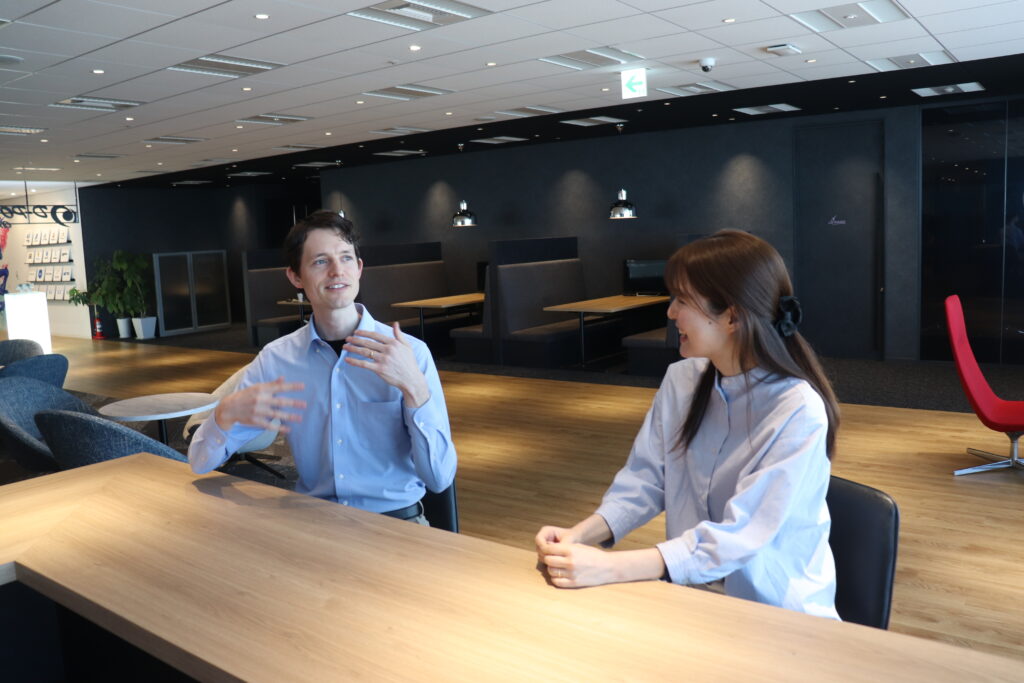
⑤As you drive President Goto around and help him practice his English in the car, have you gotten used to driving in Tokyo? Has President Goto’s English actually improved? Ha ha…
The car that President Goto chose for our company vehicle has a number of premium features that make it easier to drive safely in city traffic. It also helps that I’ve been driving for many years, so even though the streets in Tokyo are much more crowded and narrow than the roads in the US, I have been able to get used to driving here. In fact, I am always delighted every time I have the chance to drive President Goto to his various meetings and appointments and learn something from his wise words.
And yes, as President Goto is using English more consistently, he is more capable of recalling the foundation that he built as a high school and university student in the US and the UK. All I’m doing is providing him with an atmosphere where he can comfortably practice and supplying him with correct vocabulary and natural English phrasing when appropriate. He has been making steady progress, and is definitely more visibly confident when speaking English compared to a year ago. However, he often likes to encourage me by saying that he wishes his English would improve as fast as my Japanese, ha ha.
⑥You seem to have a proactive stance towards speaking Japanese with everyone around you in our office. When did you learn Japanese? Is the Japanese business lingo that we use here difficult?
While I was living with that Japanese family during my first year in Tokyo, they helped me learn the fundamentals of everyday conversation, and I became capable of basic communication. However, after I moved out of their home, my Japanese level essentially stagnated, since the only time I spoke it was in the exact same situations in daily life and did not usually seek out opportunities to study and improve my language abilities.
After joining D-POPS GROUP last year, I found myself in a Japanese work environment for the first time in my life, so there have been countless moments where I’ve been challenged and stretched. It’s not just that business Japanese is difficult for me to learn, but also that I had virtually no experience in the business world before starting this job. As a result, while I’m trying to pick up polite Japanese phrases that are commonly used in the office, I’m also learning about the concepts, situations, and systems behind those phrases at the same time.
I want to provide as much value to D-POPS GROUP as possible, since I understand that I can contribute to society more this way. To that end, I have undertaken a lot of challenges and overcome almost as many obstacles, thanks to the patience and understanding of my excellent and gracious coworkers, though there are still many more to go. And I want to tell everyone within our Venture Ecosystem that I am always happy to practice my Japanese, so when you see me, please don’t hesitate to say hello!
⑦What differences have you felt between living and working in Japan compared to the US?
In my opinion, the biggest way that life in Japan is different from life in the US is the perception of peer pressure. From what I’ve seen over the past ten years, Japanese people seem to be very considerate of other people, to the point that they try to remain aware of the outward behaviors and even the unspoken feelings of the people around them. In addition, they usually have a deep reverence for common courtesy, harmony, and consensus, and would rather inconvenience themselves than voice an opinion contrary to the majority. On the other hand, Americans place a very high value on the personal independence of the individual. From a young age, we are taught that we should think before we copy what everyone else is doing, and we prize uniqueness above uniformity.
There are obviously many reasons why these two cultures are so opposite, but I think one primary root may be the lack of livable space in Japan combined with the history of frequent natural disasters here. When the threat of earthquakes, tsunamis, or other dangers is always near, and your neighbors live so close that a house fire can spread to surrounding buildings almost instantly, it becomes critical to maintain amicable relations with all the people you interact with on a regular basis, so that you can rely on their help in an emergency, rather than watch them gleefully loot your belongings as you lay dying.
I’ve also noticed some smaller contrasts between Japanese and American lifestyles that our readers may find interesting. For one, Japanese tend to keep their social circles cleanly distinct from each other, so family, acquaintances, and coworkers rarely mix. Americans, however, are much less shy about introducing family to their friends and colleagues who are close to them, so I’ve had to get used to knowing next to nothing about my team members’ personal lives, even though I talk with them all the time. Another is that while most Japanese eat rice at least once a day as part of their diet, Americans aren’t usually loyal to a single staple food, and will even eat meals that contain no staple food at all.
Finally, this isn’t necessarily a major difference between Japan and the US, but rather something that’s starting to change in both cultures. Until recently, fathers did not usually take a long paternity leave. However, I decided to take advantage of the Japanese government’s childcare provisions to stay with my wife and children at my parent’s house in the US for much of December and January. My coworkers at D-POPS GROUP were very supportive, and though I’ve heard horror stories of fathers at Japanese companies coming back from paternity leave to find their position relocated or minimized, in my case there was nothing of the sort.

⑧After joining D-POPS GROUP, you have been working on the English version of our company’s website. What are your most important considerations for writing English translations?
First of all, I try to imagine the audience who will be reading these translations. They could be executive members of foreign companies thinking about expanding their business into Japan, or venture capital investors looking for a good return from a Japanese startup, or even members of D-POPS GROUP or our partners who simply want to practice their English reading ability. This affects the word choice and overall tone of each article I translate, and also helps me decide how to convey phrases or ideas that have no direct translations.
Next, I do my best to paint a clear picture of the mission, vision, and values of D-POPS GROUP and our leaders in such a way that anyone who reads the pages of our website in English will be able to sense them through what parts are emphasized and even through the vocabulary I use. After all, I believe that the energy surrounding us really is special, so I hope to share as much of that spark as possible with our readers.
Finally, since I am still quite far from being bilingual, I would not be able to accomplish the task of translating our website without the support of our corporate advisor, Genta Sugihara. Without his wisdom, experience, and especially his deep knowledge of startups and corporate venture capital, you would not be reading this now. Not only with translation, but he has also given me invaluable advice on navigating the unfamiliar world of working at a Japanese company, and I can’t express in words how much I sincerely appreciate him.
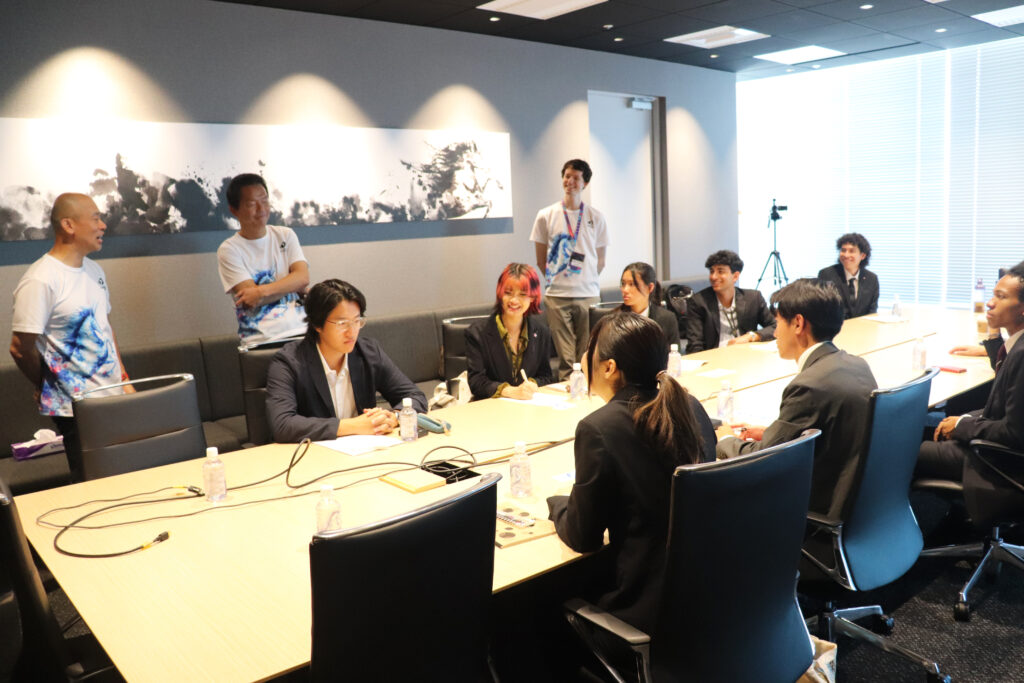
⑨In August, we hosted a group of delegates from the Japan-America Student Conference. You helped to create English presentation materials that were oriented towards students, and also did a little bit of interpretation on that day. What were your impressions of all the work that went into making those materials and what you experienced on the day of their visit?
That event was my first taste of getting to work more closely with President Goto, and it was definitely awe-inspiring to witness firsthand how much thought and effort he puts into anything he does. He was put in a position where he was out of his element, and I would guess that is not usual for someone at his level of professionalism. But even in the midst of a situation like that, he was able to think strategically about what he could do in the limited time before the presentation, and also what was not possible.
For example, I first prepared a script for him that might have seemed quite impressive to an academic audience in an English-speaking country. However, it contained a significant amount of high-level vocabulary he was not familiar with. President Goto pointed out to me that since he did not have a long time to prepare, it would be better for him to focus on practicing fluently speaking words he already knows than on learning a bunch of new words. Then we went back and forth over the next several weeks, refining his script and his presentation slides until he was satisfied with them. This was also an educational experience for me, as I learned that being able to reach a state of 90% perfection in a timely manner is much more important in a business setting than finally getting to the point of 100% perfection long after the deadline has already passed.
When the students arrived at the Shibuya Hikarie Building, I had the honor of showing them around various parts of our inspirational office space and explaining their significance in English. Then, after we listened to President Goto and Advisor Sugihara share their lectures, I was supposed to help interpret for the students and our company leaders, but it turned out that between President Goto’s English skills and the Japanese ability that several of the American students had, I hardly needed to say anything. Given my work background in connecting with university students, I was so happy to see a deeper understanding of the value of entrepreneurship dawn on their faces over the course of our time together.
⑩What kinds of activities at D-POPS GROUP do you hope to participate in from now on?
My knowledge and experience in the venture capital business is still almost zero, but someday I hope to be a more active participant in the process of welcoming new partners to our Venture Ecosystem. Over the past couple of months, I’ve been given the privilege of facilitating communication between the members of our CVC team and a pair of foreign entrepreneurs who want to more firmly establish their business in Japan. This has been exhilarating for me, and I want to increase my capabilities in this regard.
Besides the CVC team, I hope to support any other conversations that take place between members of our Venture Ecosystem and non-Japanese speakers. One of my personal goals at D-POPS GROUP is to utilize my English skills to serve our expansion onto the global stage. In accordance with that, I want to keep myself available as an asset anytime there is a need for a native English speaker. Speaking of which, I'm hoping to start some English-related activities within D-POPS GROUP's Ecosystem sometime soon. If anyone is interested, please feel free to contact me!
Beyond this, I’d really like to continue improving my Japanese language and business skills to the point that not only am I a professional English translator for D-POPS GROUP, but also that I prove to be truly useful in other areas. I’m excited to see what I look like after another year of working here!