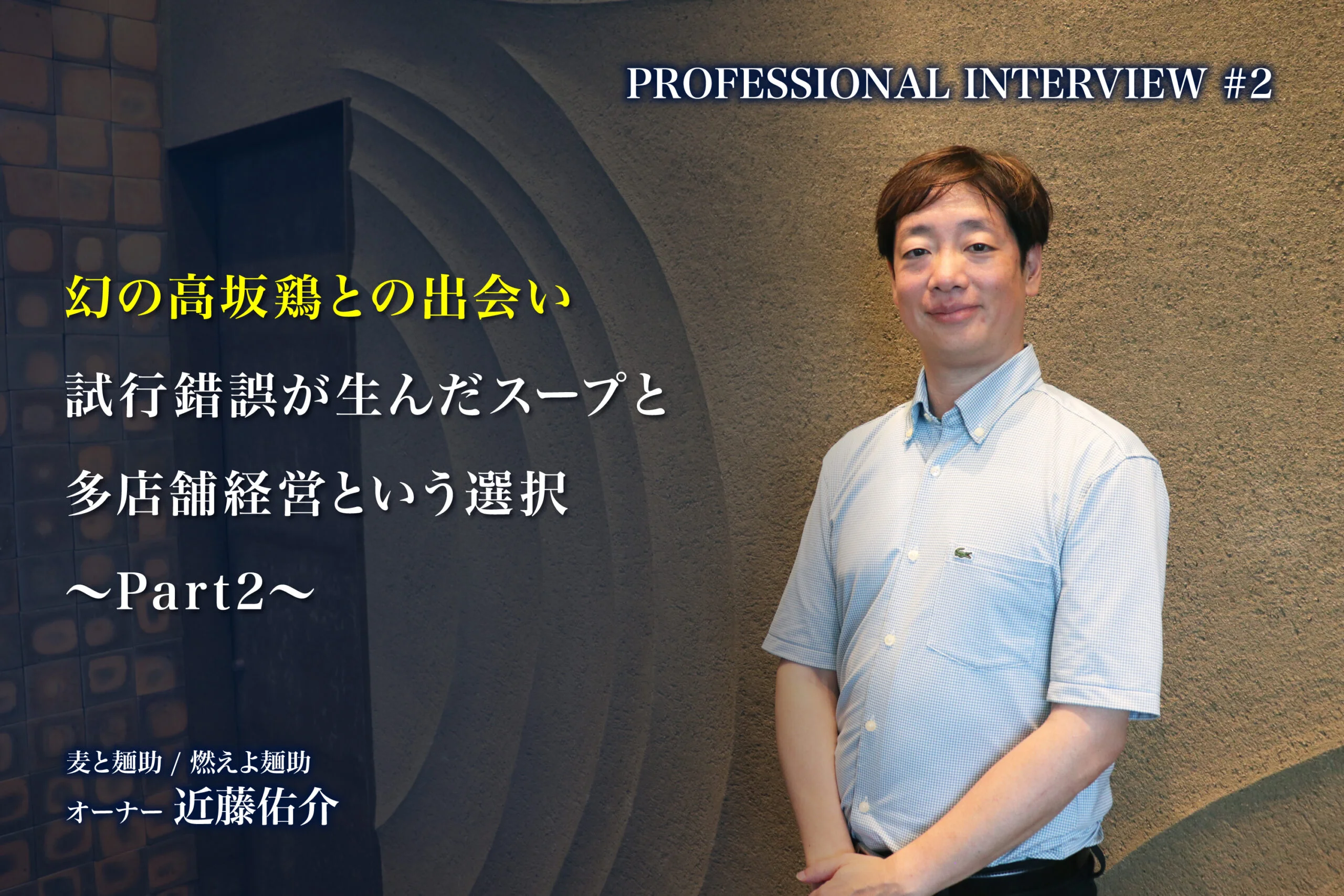
Encountering the Phantom Takasaka Chicken: A Broth Born from Trial and Error
In Part 2, the second of our three-part interview with President Kondo, we asked about the importance of eating out and exploring other culinary genres, the behind-the-scenes management unique to a restaurant with endless lines, strategies for multi-store management and brand building, as well as the pop-up store at Azabudai Hills and his encounter with the rare Takasaka chicken. (This interview was conducted in July 2026.)
Please check out Part 1 of this interview if you have not already!
◆The Attitude of Learning from the Best: Reasons for Exploring Food Beyond Ramen
Sugihara:
I’ve heard that you travel all over Japan to study other food besides ramen. You’ve mentioned before that a ramen artisan can’t create great flavors just by eating ramen, and that you visit renowned restaurants everywhere, whether it’s French cuisine, sushi, or tempura. Could you share your thoughts and feelings on this topic once again?
Kondo:
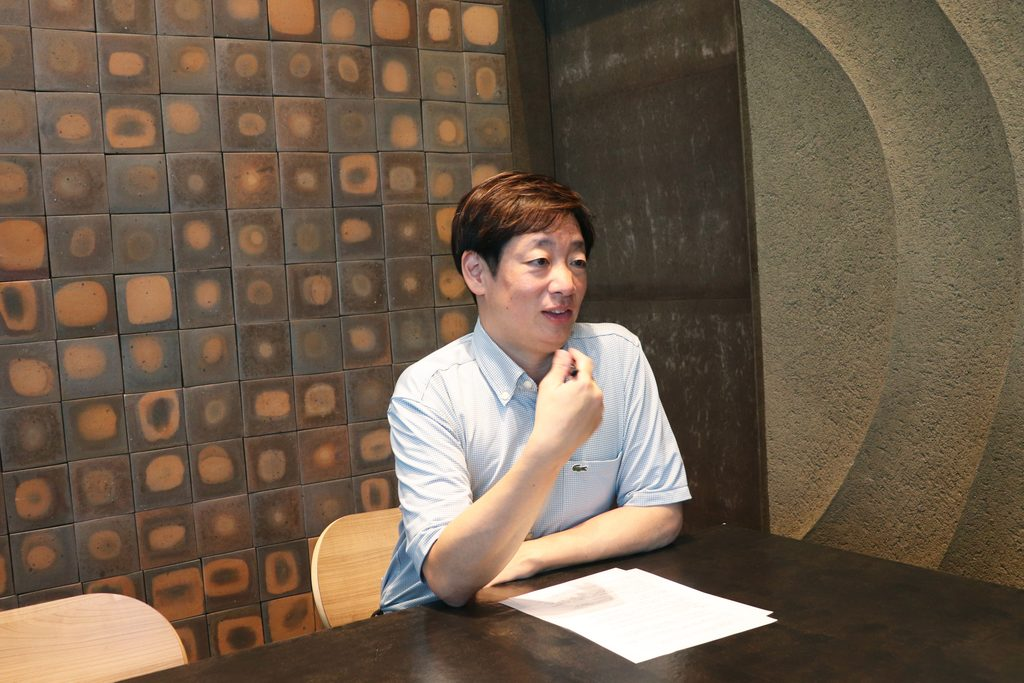
Ultimately, I believe there’s a massive difference between knowing something and not doing it, versus not knowing it at all and not doing it.
I often go to experience places considered the absolute best in Japan for Western cuisine, soba, tempura, and other traditional Japanese foods, because I want to understand why they are ranked number one. When you visit places like that, there is nothing to do but learn.
Taste involves many variable factors. There are plenty of chefs making incredible flavors, but whether everyone will universally rate them as the best is relative, not absolute. So, when I think about how they establish themselves as the definitive number one through elements other than just taste, I find that a lot of lessons are hidden there.
I learn from these places by actually going there myself and listening to the philosophies of those who are at the top. If you ask, “How do you make this?”, most of the time a true top-tier professional will simply tell you how. I think that’s because they have the confidence that even if you try to copy them, you won’t be able to replicate it.
That’s exactly why I listen, try to make the dish myself, think to myself something isn’t quite right, confirm that it isn’t, and then ponder why that is. Through repeating this process, you start to see something you can incorporate into your own cooking. However, rather than putting too much stock into technical skills, it ultimately comes down to the atmosphere, the space, and the people. In the end, I think it boils down to wanting to eat the food made by a specific person.
Sugihara:
That’s a common occurrence in the startup world, too. Some executives assume that if you make a good product, it will sell; but eventually, the delivery, the aftercare, the support, and even the product packaging become critically important.
Kondo:
That’s exactly right. Even in the ramen industry, just 10 or 20 years ago, there was an era where trends were born from recipe sites. Recipes for soy sauce blends and soups were circulating, and it was a time when you could recreate a flavor just by mimicking them.
However, the sense of speed is completely different now, so a restaurant won’t become popular just by copying a recipe. We are in an era where it’s difficult to succeed on the product alone. People often talk about the importance of coming up with a story, and I feel that if you don’t incorporate the chef’s personality and charm, it’s tough to survive nowadays just by offering objectively delicious ramen.
◆A Flagship Store That Doesn’t Run After Profit: The Concept of Group Management
Sugihara:
That’s wonderful. You’ve crafted your flavors while learning from other types of restaurants and industries.
Earlier, you mentioned the long lines. When I look at Mugi to Mensuke, the turnover rate itself isn’t bad, but considering your limited operating hours, the prep work must be incredibly time-consuming. That means there’s a limit to how many bowls of ramen you can serve in a day, and the costs must be quite high. Yet, the price is just under 2,000 yen. Is that viable from a business perspective?
Kondo:
To be honest, I look at that in terms of the gross total. For example, if we simply multiplied stores like our current Nakatsu location until we had 10 of them, the profit margin would become quite thin.
However, I assign a specific theme to each store. The theme for Mugi to Mensuke is “authenticity”. I want to incorporate even a tenth of the techniques I’ve learned from the top-tier professionals I study under, and relate that to the idea that food is fun. Not everyone can go to a restaurant that costs 50,000 yen a meal, but by letting them experience just a tenth of that, I hope to convey how fun eating can be and how amazing Japanese food is. Because of that, I’m not really pursuing profit at this specific location.
Sugihara:
So, you don’t deeply pursue profit at that single store…it’s positioned almost like a flagship location.
Kondo:
Exactly. If we chased profit at Mugi to Mensuke, we’d end up heading in a different direction and deviating from the original theme. Offering something authentic at that price point makes it the kind of restaurant I would personally want to visit if I were a customer.
Also, through meeting various people and absorbing things from our conversations, I’ve gradually come to realize the need for a corporate management philosophy. I started from the point of wanting to make delicious food, studied everything from that perspective, and eventually arrived at the realization that it’s absolutely necessary to have a vision to hold onto.
Sugihara:
Mugi to Mensuke acts as the flagship, while your two “Naniwa Menjiro” restaurants each have the role of firmly pursuing profit. It’s a structure similar to diversification or group management in corporate terms.
Kondo:
Yes, that’s right. In our case, I’m entrusting my younger brother with running our Naniwa Menjiro locations, making it so that each of them forms one individual structure. I leave the management, including staff rotations, up to the store managers of each location, having them take full responsibility for their area and specialty. Sure, swapping out store managers frequently may create a sense of novelty, but I believe their sense of responsibility and passion for each specific store will diminish.
Sugihara:
That’s the same philosophy as D-POPS GROUP. Our group is also spun off into separate entities with CEOs at the head of each group company. They all continue to operate independently and autonomously, and there are few changeovers in leadership.
Kondo:
As expected, that passion is the foundation of people’s actions and the starting point for everything. If you change things around constantly, that feeling fades. That’s exactly why I believe it’s better not to change things too much.
◆Brands Are Not Made Intentionally but Brought Up
Sugihara:
Listening to your story, I feel that each restaurant, centered around Mugi to Mensuke, has become a powerful brand in its own right. Creating, nurturing, and protecting a brand is crucial for any business. Could you tell us your thoughts on how to build and protect a brand?
Kondo:
I strongly feel that our brand was truly brought up by our customers. I’m the type to pivot completely and quickly, so rather than intentionally calculating it myself, it feels like the brand grew through a process similar to gathering customer feedback. Today, people are kind enough to call us the number one in Osaka, but before that, there were times when the “Mensuke” name alone didn’t carry any weight. Conversely, there were also times when we entered events like ramen Grand Prixs, only for the judges’ opinions to be divided and another restaurant took first place from us.
Whether that was a good thing or a bad thing, I honestly still don’t know, even as I stand here today. However, I think once I started to purposefully determine the goal for each restaurant, that became a solid part of our brand-building process.
But to be honest, I think luck also plays a massive role. Just because you aim to brand something doesn’t mean it will necessarily work out. Having influencers come to your place doesn’t necessarily guarantee success.
Ultimately, the key word is empathy. I actually believe that a brand is a very ambiguous thing. Even a product with a high cost of goods will only be worth 100 yen if people don’t believe it’s good. Conversely, if people believe it has a value of 10,000 yen, it can become a super luxury brand even if the ingredient costs are under 10 percent. Because it is so ambiguous, getting people to understand, empathize, and properly spreading and connecting those feelings is the most important thing, and I will continue to work hard at it.
Sugihara:
So you didn’t build this shop with a brand strategy from the beginning; it slowly matured over time. Just like how you developed the flavor of your ramen, it wasn’t finished from the start, but was built together with your customers by gradually incorporating their feedback.
Kondo:
Of course, there are probably people who can meticulously design things from the start, but in my case, I strongly feel that our current form is the result of constantly adapting to our customers. We’ve seen restaurants pop up with similar names or overly similar concepts. I suppose that because we’ve been allowed to operate so smoothly, it’s easy for us to become a sort of landmark in the eyes of other restaurants. That’s exactly why over the past few years, I’ve felt the need to reach a position that is more clearly defined and difficult for competitors to imitate. As a result, we sometimes receive support from unexpected people, but I think that is ultimately just the result of being favored by many people during the times we were struggling and suffering.
◆The Azabudai Hills Pop-Up Restaurant and the Encounter with the “Phantom” Takasaka Chicken
Sugihara:
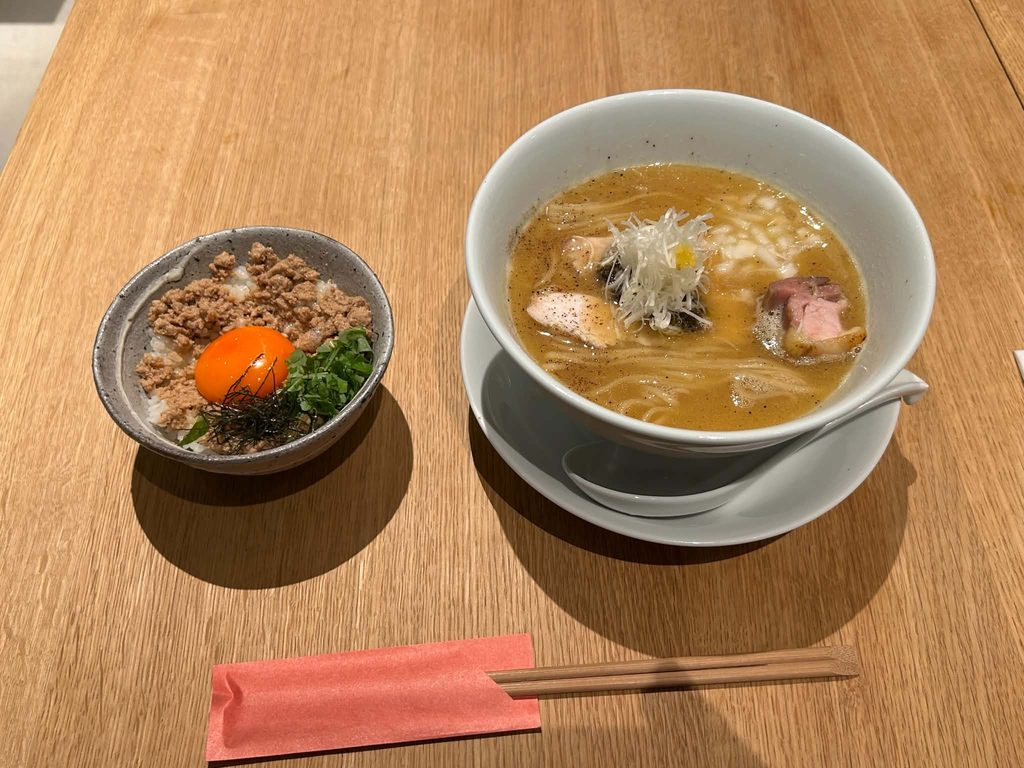
Continuing on, you held a special pop-up restaurant at Azabudai Hills in June. I had the pleasure of visiting and was served ramen made with your limited-edition Takasaka chicken soup. First, I’d like to ask, was this your first time operating a special pop-up location outside of Osaka? Also, will you continue to take on these kinds of challenges in the future?
Kondo:
Whether or not I find something interesting is the core axis of what I do. If something or somewhere makes me think it’ll be exciting, I want to proactively do it or go there.
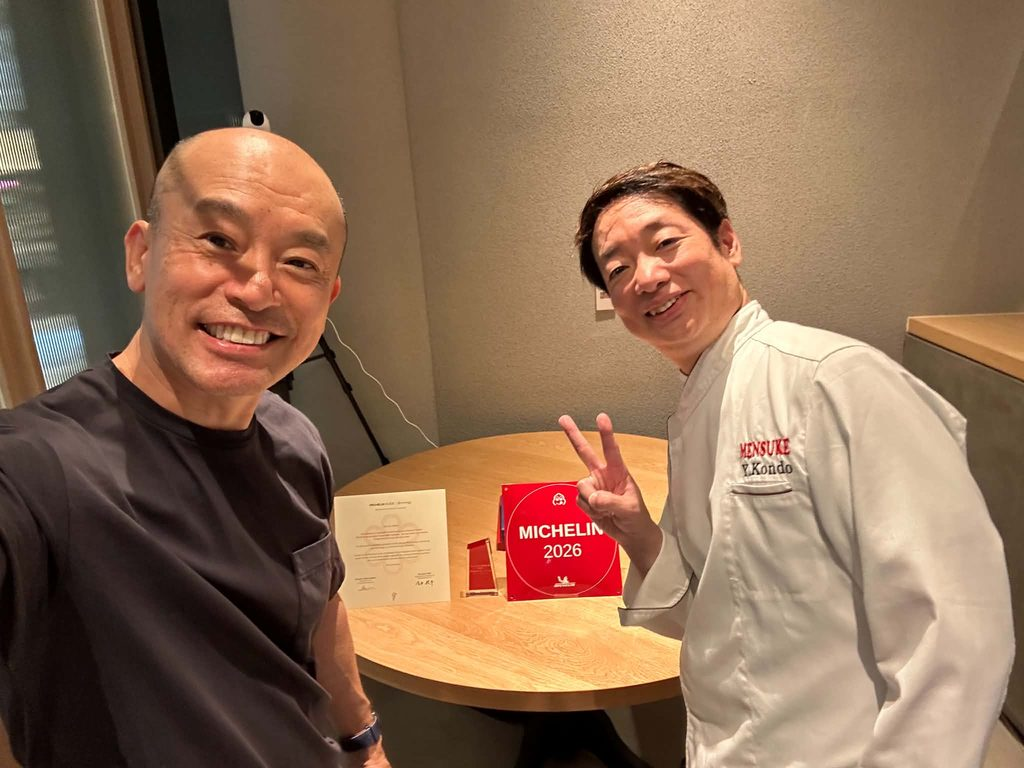
Takasaka chicken is an ingredient that is currently drawing a lot of attention, so I am truly grateful that we could even use it. The fact that Yukiko Takasaka herself recognized me and told me, “You can use our chicken as your main ingredient,” is something I’m incredibly thankful for.
Sugihara:
I’ve heard that Takasaka chicken is so rare that even yakitori restaurants struggle to get it. How were you able to procure it, President Kondo?
Kondo:
It truly happened by chance, starting with an introduction from an acquaintance who runs a yakitori restaurant. I’ve always had a personality where I’m curious about everything, and I thought if there were Takasaka chicken carcasses available, I’d love to try them, so I started by simply asking them to share only the bones with me.
However, at first, it didn’t turn out delicious at all. I knew for a fact that Takasaka chicken was amazing when I ate yakitori made from it, but when I turned it into a soup, the result was completely different. I kept wondering why. I assumed that with good ingredients, it would immediately be delicious, but the reality wasn’t like that. I talked about this with the people around me, and apparently it ended up reaching Ms. Takasaka’s ears.
From there, I went through a very long period of trial and error—one month, two months, three months. Ultimately, I perfected a soup with a color that seems just like dashi, yet goes down smoothly without sitting heavily in your stomach. Thinking simply, properly balancing the meat and the fat was the true essence of its deliciousness. Once I could get Ms. Takasaka to understand that, she gave her approval.
Sugihara:
So, by doing the work of analyzing, you’ve now built a solid supplier relationship with Ms. Takasaka. We often hear stories from startup companies where they say “That person totally saved us” or “Meeting that person was a turning point”. Encountering the right people truly is important, isn’t it?
Kondo:
I truly believe so. My mentor taught me that the only time a person changes is when they meet someone. Even if you think to yourself, “I’ll change starting tomorrow,” it’s quite hard to actually do it. That’s how weak humans are. However, the moment of change is often triggered by a powerful encounter with someone that serves as a turning point. There have been several intersections like that in my own life, as well.
~To be concluded in Part 3~
Interview conducted by D-POPS GROUP’s advisor Genta Sugihara.
【Mugi to Mensuke】
Owner: Yusuke Kondo
Location: 3-4-12 Toyosaki, Kita-ku, Osaka-shi, Osaka
Established: May 19, 2018 (sister restaurant “Moeyo Mensuke” established in Fukushima, Osaka, in April 2016)
Sister Restaurants: Moeyo Mensuke (Fukushima, Osaka), Naniwa Menjiro locations (Namba, Osaka, and Umeda, Osaka)
Next, in the final part of the interview, we discuss:
・The potential for global expansion of ramen as a Japanese cuisine
・Collaborations with other industries leveraging the brand
・The most important thing to cherish in restaurant management
・Alignment with D-POPS GROUP’s aim of realizing a Venture Ecosystem
・A message to our readers
Be sure to check it out here:
https://d-pops-group.co.jp/en/column/mugitomensuke-part3/